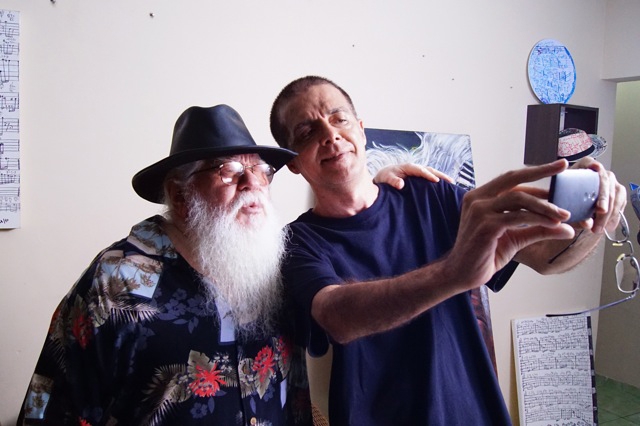
Pianist Eliane Elias to perform @ the Jazz Bakery series at the Moss Theater, featuring Marc Johnson (bass), Rafael Barata (drums) and Rubens de la Corte (guitar)
Friday, October 4th, 8 pm.
Seat selection: Available on desktop only / Mobile will auto-select ‘best available’.
Tix:
Limited VIP: $60 / General: $45
VENUE: Moss Theater
at The Herb Alpert Educational Village
3131 Olympic Blvd.
Santa Monica, CA 90404
Free parking adjacent to Moss Theater on New Roads Campus.
KJAZZ 88.1 - official media sponsor.
Sunday, August 25, 2019
Wednesday, August 7, 2019
Chase Baird meets Antonio Sanchez and Brad Mehldau on his new album, out tomorrow
Soundsabound Records presents the latest work by young saxophonist and composer Chase Baird: "A Life Between," covering a vast emotional terrain with a band comprised of modern jazz's most revered innovators. GRAMMY-winning drummer Antonio Sanchez and 5-time GRAMMY-nominated pianist Brad Mehldau are veteran companions alongside new-generation talents Nir Felder, guitar, and Dan Chmielinski, bass. In a single day of recording, the group unites organically around the saxophonist's vision to produce high color statements and a profoundly felt artistic message.
A member of drummer Antonio Sanchez's recent band, Migration, Baird shares the virtuoso percussionist's interest in performing both hard-hitting and tender material—often within a single tune. On "A Life Between," Baird's cinematic compositions, fit for a stadium, alternate between power anthem and aching ballad. Indeed, with Nir Felder's pedal board adding eerie, even fearsome sonic landscapes, the album seems to chart an intergalactic drama, a dystopic world confronted by a romantic heroism.
For Baird, making this record was as much about the actual music as it was about his journey to triumph over the challenges facing young artists in New York. When times were tough and work was thin, Baird says he made it his mission "to cultivate a romanticism inside myself, even when the circumstances weren't romantic." So, caught in the middle—between dreaming up a life as a performing artist and realizing that dream—the saxophonist fell headlong into both composition and romance; and it is from this friction—between love and work—that "A Life Between" was born.
A chance encounter with Brad Mehldau five years ago, on the day of Baird's graduation from Juilliard, led to a patiently tended relationship. The innovative pianist's influence on Baird's writing is evident, and Mehldau provides both breathtaking solos and sage-like accompaniment throughout the recording. However, the magic of this music is that it so remarkably lacks any of the cliché awkwardness that usually spoils attempts by young musicians to record with one-time, "all-star" casts of "big-name" artists. Instead, a deep chemistry pervades the album, and all members play orchestrally, architecting each song's distinctive story. The personalities are balanced: Chmielinksi is actively bighearted and Sanchez is propulsively generous; Mehldau's conversation is both selfless and clever, and Felder's timely textures are both wild and intelligent; Baird's leadership is both urgent and vulnerable, bending often toward the prophetic.
Baird composed the music in two distinct periods. "Ripcord," the opening number, filled with sweet yearning and a fearsome grunge streak; "As You Are," a medium-tempo waltz with bold solos by Baird and Felder; and the title track, "A Life Between," a heartbreakingly gentle hymn that builds to a collective pitch; were all penned shortly before or after he moved to New York in 2010. After a five year writing hiatus, he took another two to finish the rest of the music: the Sanchez-inspired "Reactor," a battle call in 7/4; "Dream Knows Know End," which floats along darkly at high speed; "Wait and See," a dangerous blues; and "In the Wake (of Urban Overdrive)," penned out of joy and hope, upon Baird's emergence from a period of depression.
For Robert Schumann's "Im wunderschönen Monat Mai" ("In the Beautiful Month of May"), which closes the album, Baird simply handed the band the original classical score, resulting in a plainly tender testament to love. Baird states: "I wanted to write and play songs more as vehicles for group improvisation than as intricate compositions. To let the band get into a vibe and take off."
Chase’s humble insistence that his message be conceptually simple, and that his compositions be clear, was handled with grace by the legendary recording engineer James Farber, whose expertise has aided just about every major star in jazz. “James’s rough mixes sounded incredible,” Chase marvels, “and we barely had to adjust them, in the end. He’s a master.” And really, listening to "A Life Between," it’s hard not to be moved by the sheer sound of the recording, which is vivid, raw, and lush, a loving portrait of the group’s virtuosity and sincerity.
"I really want to be in Radiohead," Baird jokes. "But how can I be a saxophonist and do that?” Part experimental rocker, part classical romantic, part Coltrane-devotee, Chase has answered his own question on A Life Between with a sound that is fresh, personal, and daring. A thunderous introduction into the mainstream: only at the beginning of his journey, and already dreaming up new lands through which to walk.
“Ripcord,” the album’s first track, debuted as a single on July 19th.
"A Life Between" will be released worldwide on August 9th.
A member of drummer Antonio Sanchez's recent band, Migration, Baird shares the virtuoso percussionist's interest in performing both hard-hitting and tender material—often within a single tune. On "A Life Between," Baird's cinematic compositions, fit for a stadium, alternate between power anthem and aching ballad. Indeed, with Nir Felder's pedal board adding eerie, even fearsome sonic landscapes, the album seems to chart an intergalactic drama, a dystopic world confronted by a romantic heroism.
For Baird, making this record was as much about the actual music as it was about his journey to triumph over the challenges facing young artists in New York. When times were tough and work was thin, Baird says he made it his mission "to cultivate a romanticism inside myself, even when the circumstances weren't romantic." So, caught in the middle—between dreaming up a life as a performing artist and realizing that dream—the saxophonist fell headlong into both composition and romance; and it is from this friction—between love and work—that "A Life Between" was born.
A chance encounter with Brad Mehldau five years ago, on the day of Baird's graduation from Juilliard, led to a patiently tended relationship. The innovative pianist's influence on Baird's writing is evident, and Mehldau provides both breathtaking solos and sage-like accompaniment throughout the recording. However, the magic of this music is that it so remarkably lacks any of the cliché awkwardness that usually spoils attempts by young musicians to record with one-time, "all-star" casts of "big-name" artists. Instead, a deep chemistry pervades the album, and all members play orchestrally, architecting each song's distinctive story. The personalities are balanced: Chmielinksi is actively bighearted and Sanchez is propulsively generous; Mehldau's conversation is both selfless and clever, and Felder's timely textures are both wild and intelligent; Baird's leadership is both urgent and vulnerable, bending often toward the prophetic.
Baird composed the music in two distinct periods. "Ripcord," the opening number, filled with sweet yearning and a fearsome grunge streak; "As You Are," a medium-tempo waltz with bold solos by Baird and Felder; and the title track, "A Life Between," a heartbreakingly gentle hymn that builds to a collective pitch; were all penned shortly before or after he moved to New York in 2010. After a five year writing hiatus, he took another two to finish the rest of the music: the Sanchez-inspired "Reactor," a battle call in 7/4; "Dream Knows Know End," which floats along darkly at high speed; "Wait and See," a dangerous blues; and "In the Wake (of Urban Overdrive)," penned out of joy and hope, upon Baird's emergence from a period of depression.
For Robert Schumann's "Im wunderschönen Monat Mai" ("In the Beautiful Month of May"), which closes the album, Baird simply handed the band the original classical score, resulting in a plainly tender testament to love. Baird states: "I wanted to write and play songs more as vehicles for group improvisation than as intricate compositions. To let the band get into a vibe and take off."
Chase’s humble insistence that his message be conceptually simple, and that his compositions be clear, was handled with grace by the legendary recording engineer James Farber, whose expertise has aided just about every major star in jazz. “James’s rough mixes sounded incredible,” Chase marvels, “and we barely had to adjust them, in the end. He’s a master.” And really, listening to "A Life Between," it’s hard not to be moved by the sheer sound of the recording, which is vivid, raw, and lush, a loving portrait of the group’s virtuosity and sincerity.
"I really want to be in Radiohead," Baird jokes. "But how can I be a saxophonist and do that?” Part experimental rocker, part classical romantic, part Coltrane-devotee, Chase has answered his own question on A Life Between with a sound that is fresh, personal, and daring. A thunderous introduction into the mainstream: only at the beginning of his journey, and already dreaming up new lands through which to walk.
“Ripcord,” the album’s first track, debuted as a single on July 19th.
"A Life Between" will be released worldwide on August 9th.
Big Band CD of the Month - "Terraza Big Band: One Day Wonder"
Big Band CD of the Month
Terraza Big Band: "One Day Wonder"
Rating: **** (musical performance & sonic quality)
Featuring: John Fedchock, Luis Perdomo, Troy Roberts, John Ellis, Roman Filiú, Samuel Torres and more
The Terraza Big Band, whose new debut album for Outside in Music is One Day Wonder, is striking from every angle, a marvelous exploration of the possibilities of the big-band format. There’s the composing-arranging of its co-founders and co-leaders, the alto saxophonist Michael Thomas and the bassist Edward Perez, full of resolutely modern jazz-orchestral harmony, inventive forms and a gamut of rhythms, from 21st-century swing to an encyclopedia of Latin-based styles. There’s the lineup, including many of the best young jazz-trained musicians in New York City, given ample opportunity to express their signature voices throughout the leaders’ generous charts. Then there are the X factors that might be a bit harder to define but are crucial nonetheless: an elastic, adaptable feel in the arrangements and performances that somehow gives this 18-piece outfit a small-group vibe; the sense that these high-caliber musicians are utterly engaged with and trusting of the leaders’ vision; a narrative approach to concert and album programming that gives a set of music the dimensions of an excellent film.
Of course, a project of this magnitude could only have developed in a very special place—in this case a venue special enough to give the group its moniker. Since its beginnings in the summer of 2015, Thomas and Perez’s band has held down a regular gig at Terraza 7, an extraordinary club in Queens, located between the neighborhoods of Elmhurst and Jackson Heights. Founded by Freddy Castiblanco, a Colombian-born former doctor and veteran community organizer, Terraza 7 features a wide range of global music and jazz—its schedule of various Latin-based ensembles is among the strongest in New York—and provides a place for artists and neighbors to coalesce around issues of social justice. “Terraza 7 is a mission for Freddy,” Perez says.
On the first Thursday of every month, the members of the Terraza Big Band become a part of that community, participating in an open rehearsal and then giving a full-length concert. To hear the band on its home turf is to receive an audiophile-worthy live-music experience. Seated directly across from the musicians, who are arranged on the venue’s transparent, loftlike stage that looms over the bar, every tricky form, every precision section part, every stout Cuban-influenced bassline, every heroic horn solo feels stunningly vibrant. The crowd—locals, jazz heads and curiosity-seekers alike—responds in kind. As the New York Times wrote in a piece on the current renaissance of New York-based large ensembles, “the [Terraza Big Band’s] audience was fully on board, but the ideas were entirely new.”
One Day Wonder, gorgeously recorded at Systems Two studio and conducted by Miho Hazama, herself a brilliant large-ensemble composer and bandleader, is essentially a virtual-reality jaunt to that great-sounding wedge-shaped room in Queens. It opens with Thomas’ “Zed,” a pointedly modern—think Kurt Rosenwinkel and Mark Turner at their most invitingly melodic—but highly playable piece. Perez’s “A New Leaf” follows, a seamless meld of buoyant Colombian-informed rhythm, graceful melody and symphonic ideas applied to jazz orchestration. “One Day Wonder,” a challenging composition crafted by the band’s tenor saxophonist Troy Roberts, is another example of Thomas’ ability as an arranger to take thrilling small-group jazz and magnify it to big-band proportions—remarkably, with no loss in urgency or expressivity. “Without Doubt” takes its title from Thomas’ experience writing it—an easygoing, almost intuitive process where everything seemed to fall into place. Here the tune provides a showcase for Thomas’ kinetic yet serene composing and some elegant solo work by Roberts, pianist Luis Perdomo and trumpeter Dave Neves.
The next two pieces dig into Perez’s life experience. His “Pasar el Tiempo, Aunque Fugaz, Contigo,” propelled by danceable rhythms and splashed with vivid colors, is a big-band update of an older number, written to reflect the excitement and euphoria that accompanied a romance Perez traversed in his 20s. “I’m 40 now,” he says with a laugh. “I wanted to see if I could retell a story from earlier in my life, and maybe tell it with a little more nuance.” “Flights of Angels,” featuring at its core Perez’s breathtaking solo bass work, is a mediation on a surreal, out-of-body encounter in the street with some especially ghostlike fog. Thomas’ midtempo swinger “Longing” contrasts odd phrases and plenty of chord changes with wide-open harmonic space for expert blowing, including a master class of a solo from the legendary trombonist John Fedchock. Perez’s “Me Lo Dijo Mi Primo” also finds plenty of inspiration in fantastic extended blowing over simple harmony—this time it’s tenorman John Ellis out front—as well as an invaluable lesson in clave that Perez learned from his fellow bassist Alain Pérez. (It’s all about the downbeats.) “Think Tank” closes the record with Thomas’ au courant vision, a small-group postbop burner writ large. Throughout One Day Wonder, many other soloists step up, among them guitarist Alex Wintz, alto saxophonist Roman Filiú, percussionist Samuel Torres and Thomas, whose fiery composure as a player evokes everyone from beboppers like Phil Woods to such bold modernists as Miguel Zenón and David Binney. Other nonpareil players interpret the co-leaders’ charts with aplomb: Andy Gutauskas, on baritone saxophone and bass clarinet; trumpeters Sam Hoyt, Alex Norris and Josh Deutsch; trombonists Matt McDonald and Nick Vayenas; bass trombonist Jennifer Wharton; and drummer Jimmy Macbride.
A graduate of the University of Miami’s Frost School of Music, where he attended on a full scholarship, Thomas also earned a master’s in jazz performance from New England Conservatory, where he received the jazz department’s sole Presidential Scholarship. While at NEC, his composition “Refract” won a DownBeat Student Music Award. Thomas’ debut album, The Long Way, was released in April of 2011. That same year, he moved to New York City to study at Juilliard and hit the ground running. Today he’s appeared as a sideman on more than 20 recordings, including Miguel Zenón’s Grammy-nominated 2014 big-band release, Identities Are Changeable, and the Dafnis Prieto Big Band’s Back to the Sunset, which recently won the Grammy for Best Latin Jazz Album. While maintaining his work as a much sought-after educator and composer, he’s performed with such luminaries as Wayne Shorter, Nicholas Payton, Jason Moran, Dave Liebman, Brian Blade, Gunther Schuller, John Patitucci, Randy Brecker, John Hollenbeck and Jason Palmer.
Perez garnered bandstand experience in Boston as well, while studying math at Harvard University. He later spent two years in Lima, Peru, performing with and learning from Afro-Peruvian musical royalty including Grammy-winners Eva Ayllón and Juan Medrano “Cotito.” As a bassist he’s shared stages with Lee Konitz, Greg Osby, Seamus Blake, Lionel Loueke, Kenny Werner, Jason Palmer, Paquito D’Rivera, Ignacio Berroa and Arturo O’Farrill, in whose Afro Latin Jazz Orchestra he’s appeared often in recent years. His recording credits include the pianist Hector Martignon’s Grammy-nominated Latin-jazz album Second Chance, and his music has been performed by the likes of Berroa, the Silkroad Ensemble, Yo-Yo Ma, Alan Gilbert, Cristina Pato and Jorge Pardo. A respected educator as well, he’s taught privately at the New School of Jazz and Contemporary Music and has held ongoing teaching positions at other institutions.
Thomas and Perez connected in Boston, where they’d returned to play a mutual friend’s gig. They ended up becoming roommates in New York for a time—the perfect incubator in which to work rapidly and fruitfully on new music and fuse Thomas’ deep modern-jazz interests with Perez’s Latin-oriented mastery. “We first talked about just getting some friends together to read through some charts, but we were having some really strong espresso,” Perez recalls, chuckling. “Then we were like, well, if we do that, we should do a gig.”
“When the band started,” Thomas adds, “we wanted to play with our favorite players. We were living together, and we were cranking out new charts all the time. We were sharing these ideas with each other and then taking them to the monthly gig, learning from each other.”
Terraza Big Band: "One Day Wonder"
Rating: **** (musical performance & sonic quality)
Featuring: John Fedchock, Luis Perdomo, Troy Roberts, John Ellis, Roman Filiú, Samuel Torres and more
The Terraza Big Band, whose new debut album for Outside in Music is One Day Wonder, is striking from every angle, a marvelous exploration of the possibilities of the big-band format. There’s the composing-arranging of its co-founders and co-leaders, the alto saxophonist Michael Thomas and the bassist Edward Perez, full of resolutely modern jazz-orchestral harmony, inventive forms and a gamut of rhythms, from 21st-century swing to an encyclopedia of Latin-based styles. There’s the lineup, including many of the best young jazz-trained musicians in New York City, given ample opportunity to express their signature voices throughout the leaders’ generous charts. Then there are the X factors that might be a bit harder to define but are crucial nonetheless: an elastic, adaptable feel in the arrangements and performances that somehow gives this 18-piece outfit a small-group vibe; the sense that these high-caliber musicians are utterly engaged with and trusting of the leaders’ vision; a narrative approach to concert and album programming that gives a set of music the dimensions of an excellent film.
Of course, a project of this magnitude could only have developed in a very special place—in this case a venue special enough to give the group its moniker. Since its beginnings in the summer of 2015, Thomas and Perez’s band has held down a regular gig at Terraza 7, an extraordinary club in Queens, located between the neighborhoods of Elmhurst and Jackson Heights. Founded by Freddy Castiblanco, a Colombian-born former doctor and veteran community organizer, Terraza 7 features a wide range of global music and jazz—its schedule of various Latin-based ensembles is among the strongest in New York—and provides a place for artists and neighbors to coalesce around issues of social justice. “Terraza 7 is a mission for Freddy,” Perez says.
On the first Thursday of every month, the members of the Terraza Big Band become a part of that community, participating in an open rehearsal and then giving a full-length concert. To hear the band on its home turf is to receive an audiophile-worthy live-music experience. Seated directly across from the musicians, who are arranged on the venue’s transparent, loftlike stage that looms over the bar, every tricky form, every precision section part, every stout Cuban-influenced bassline, every heroic horn solo feels stunningly vibrant. The crowd—locals, jazz heads and curiosity-seekers alike—responds in kind. As the New York Times wrote in a piece on the current renaissance of New York-based large ensembles, “the [Terraza Big Band’s] audience was fully on board, but the ideas were entirely new.”
One Day Wonder, gorgeously recorded at Systems Two studio and conducted by Miho Hazama, herself a brilliant large-ensemble composer and bandleader, is essentially a virtual-reality jaunt to that great-sounding wedge-shaped room in Queens. It opens with Thomas’ “Zed,” a pointedly modern—think Kurt Rosenwinkel and Mark Turner at their most invitingly melodic—but highly playable piece. Perez’s “A New Leaf” follows, a seamless meld of buoyant Colombian-informed rhythm, graceful melody and symphonic ideas applied to jazz orchestration. “One Day Wonder,” a challenging composition crafted by the band’s tenor saxophonist Troy Roberts, is another example of Thomas’ ability as an arranger to take thrilling small-group jazz and magnify it to big-band proportions—remarkably, with no loss in urgency or expressivity. “Without Doubt” takes its title from Thomas’ experience writing it—an easygoing, almost intuitive process where everything seemed to fall into place. Here the tune provides a showcase for Thomas’ kinetic yet serene composing and some elegant solo work by Roberts, pianist Luis Perdomo and trumpeter Dave Neves.
The next two pieces dig into Perez’s life experience. His “Pasar el Tiempo, Aunque Fugaz, Contigo,” propelled by danceable rhythms and splashed with vivid colors, is a big-band update of an older number, written to reflect the excitement and euphoria that accompanied a romance Perez traversed in his 20s. “I’m 40 now,” he says with a laugh. “I wanted to see if I could retell a story from earlier in my life, and maybe tell it with a little more nuance.” “Flights of Angels,” featuring at its core Perez’s breathtaking solo bass work, is a mediation on a surreal, out-of-body encounter in the street with some especially ghostlike fog. Thomas’ midtempo swinger “Longing” contrasts odd phrases and plenty of chord changes with wide-open harmonic space for expert blowing, including a master class of a solo from the legendary trombonist John Fedchock. Perez’s “Me Lo Dijo Mi Primo” also finds plenty of inspiration in fantastic extended blowing over simple harmony—this time it’s tenorman John Ellis out front—as well as an invaluable lesson in clave that Perez learned from his fellow bassist Alain Pérez. (It’s all about the downbeats.) “Think Tank” closes the record with Thomas’ au courant vision, a small-group postbop burner writ large. Throughout One Day Wonder, many other soloists step up, among them guitarist Alex Wintz, alto saxophonist Roman Filiú, percussionist Samuel Torres and Thomas, whose fiery composure as a player evokes everyone from beboppers like Phil Woods to such bold modernists as Miguel Zenón and David Binney. Other nonpareil players interpret the co-leaders’ charts with aplomb: Andy Gutauskas, on baritone saxophone and bass clarinet; trumpeters Sam Hoyt, Alex Norris and Josh Deutsch; trombonists Matt McDonald and Nick Vayenas; bass trombonist Jennifer Wharton; and drummer Jimmy Macbride.
A graduate of the University of Miami’s Frost School of Music, where he attended on a full scholarship, Thomas also earned a master’s in jazz performance from New England Conservatory, where he received the jazz department’s sole Presidential Scholarship. While at NEC, his composition “Refract” won a DownBeat Student Music Award. Thomas’ debut album, The Long Way, was released in April of 2011. That same year, he moved to New York City to study at Juilliard and hit the ground running. Today he’s appeared as a sideman on more than 20 recordings, including Miguel Zenón’s Grammy-nominated 2014 big-band release, Identities Are Changeable, and the Dafnis Prieto Big Band’s Back to the Sunset, which recently won the Grammy for Best Latin Jazz Album. While maintaining his work as a much sought-after educator and composer, he’s performed with such luminaries as Wayne Shorter, Nicholas Payton, Jason Moran, Dave Liebman, Brian Blade, Gunther Schuller, John Patitucci, Randy Brecker, John Hollenbeck and Jason Palmer.
Perez garnered bandstand experience in Boston as well, while studying math at Harvard University. He later spent two years in Lima, Peru, performing with and learning from Afro-Peruvian musical royalty including Grammy-winners Eva Ayllón and Juan Medrano “Cotito.” As a bassist he’s shared stages with Lee Konitz, Greg Osby, Seamus Blake, Lionel Loueke, Kenny Werner, Jason Palmer, Paquito D’Rivera, Ignacio Berroa and Arturo O’Farrill, in whose Afro Latin Jazz Orchestra he’s appeared often in recent years. His recording credits include the pianist Hector Martignon’s Grammy-nominated Latin-jazz album Second Chance, and his music has been performed by the likes of Berroa, the Silkroad Ensemble, Yo-Yo Ma, Alan Gilbert, Cristina Pato and Jorge Pardo. A respected educator as well, he’s taught privately at the New School of Jazz and Contemporary Music and has held ongoing teaching positions at other institutions.
Thomas and Perez connected in Boston, where they’d returned to play a mutual friend’s gig. They ended up becoming roommates in New York for a time—the perfect incubator in which to work rapidly and fruitfully on new music and fuse Thomas’ deep modern-jazz interests with Perez’s Latin-oriented mastery. “We first talked about just getting some friends together to read through some charts, but we were having some really strong espresso,” Perez recalls, chuckling. “Then we were like, well, if we do that, we should do a gig.”
“When the band started,” Thomas adds, “we wanted to play with our favorite players. We were living together, and we were cranking out new charts all the time. We were sharing these ideas with each other and then taking them to the monthly gig, learning from each other.”
Vinyl Reissue of the Month - "Zé Eduardo Nazario: Poema da Gota Serena"
Vinyl Reissue of the Month (45rpm)
Zé Eduardo Nazario: "Poema da Gota Serena" (Lugar Alto LA-002) 2019
Rating: *****
Recorded @ JV Studios on October 23 & 30, 1982 by Edelho Gianullo & Sergio Shao-Lin
Remastered by Lelo Nazario
Cover Photo: Rogerio Santos
Artwork: Sometimes Always
Distributed by Honest Jon's
Featuring: Zé Eduardo Nazario (drums, tablas, kalimba, glockenspiel, percussion), Lelo Nazario (piano, Oberheim synthesizer, bells), Cacau (tenor sax, flute)
Zé Eduardo Nazario is a virtuoso musician, one of the world's greatest drummers. In the late 60s he was a regular at the famous Totem night club in São Paulo, performing alongside Tenório Jr. With Guilherme Franco (famous for his collaborations with McCoy Tyner), he formed the Grupo Experimental de Percussão. Besides an acclaimed solo career (having released several albums a leader) and legendary recordings with Hermeto Pascoal, Taiguara, Toninho Horta and Egberto Gismonti, he is equally celebrated for his six years as a member of the pioneering Grupo Um. Most recently I had the honor to work with him, in 2014, on Rodrigo Lima's "Saga" project, alongside Hugo Fattoruso, Frank Herzberg, Raul de Souza, Don Sebesky, Hubert Laws, Mike Mainieri and Sammy Figueroa.
Each side of this 1982 debut solo album originally released on the small Lira Paulistana label -- and previously reissued on CD format in 2015 by Editio Princeps with a different cover and bonus tracks -- explores different duets.
The opening track, "Energia dos 3 Mundos", presents Cacau (by then a member of Hermeto Pascoal's band and now living in France) improvising on tenor saxophone, and Nazário playing with a free, rolling, tumbling swing, using the kit in full. The second track, "Só Pra Ouvir" (dedicated to Hermeto) is more tranquil, featuring Zé’s mastery of the glockenspiel, and Indian percussion instruments such as the tabla and mridangam, whilst Cacau switches to a more delicate, dancing flute, combining northeastern with deep Amazonian influences.
The B-side is something else. Lelo Nazários’s synth clusters and electronic storms engage the exploratory percussion-work of "Pra Pensar" with cosmic curiosity, leading into the sublime "Prá Sentir E Pra Contar," with singing by way of South India, graceful synth chords and fluttering percussion.
Expertly remastered by genius keyboardist Lelo Nazário, directly from the original tapes, and beautifully produced, with an 45rpm 180g pressing by Pallas, brings an insert that includes reproductions of early reviews of the album. It's being released on João Visconde's Lugar Alto label, and distributed worldwide by the Portobello Road-based Honest Jon's team.
It’s a blast. A thrilling example of outernational shamanism and how music can be both spiritual and challenging at the same time. Hotly recommended.
Zé Eduardo Nazario: "Poema da Gota Serena" (Lugar Alto LA-002) 2019
Rating: *****
Recorded @ JV Studios on October 23 & 30, 1982 by Edelho Gianullo & Sergio Shao-Lin
Remastered by Lelo Nazario
Cover Photo: Rogerio Santos
Artwork: Sometimes Always
Distributed by Honest Jon's
Featuring: Zé Eduardo Nazario (drums, tablas, kalimba, glockenspiel, percussion), Lelo Nazario (piano, Oberheim synthesizer, bells), Cacau (tenor sax, flute)
Zé Eduardo Nazario is a virtuoso musician, one of the world's greatest drummers. In the late 60s he was a regular at the famous Totem night club in São Paulo, performing alongside Tenório Jr. With Guilherme Franco (famous for his collaborations with McCoy Tyner), he formed the Grupo Experimental de Percussão. Besides an acclaimed solo career (having released several albums a leader) and legendary recordings with Hermeto Pascoal, Taiguara, Toninho Horta and Egberto Gismonti, he is equally celebrated for his six years as a member of the pioneering Grupo Um. Most recently I had the honor to work with him, in 2014, on Rodrigo Lima's "Saga" project, alongside Hugo Fattoruso, Frank Herzberg, Raul de Souza, Don Sebesky, Hubert Laws, Mike Mainieri and Sammy Figueroa.
Each side of this 1982 debut solo album originally released on the small Lira Paulistana label -- and previously reissued on CD format in 2015 by Editio Princeps with a different cover and bonus tracks -- explores different duets.
The opening track, "Energia dos 3 Mundos", presents Cacau (by then a member of Hermeto Pascoal's band and now living in France) improvising on tenor saxophone, and Nazário playing with a free, rolling, tumbling swing, using the kit in full. The second track, "Só Pra Ouvir" (dedicated to Hermeto) is more tranquil, featuring Zé’s mastery of the glockenspiel, and Indian percussion instruments such as the tabla and mridangam, whilst Cacau switches to a more delicate, dancing flute, combining northeastern with deep Amazonian influences.
The B-side is something else. Lelo Nazários’s synth clusters and electronic storms engage the exploratory percussion-work of "Pra Pensar" with cosmic curiosity, leading into the sublime "Prá Sentir E Pra Contar," with singing by way of South India, graceful synth chords and fluttering percussion.
Expertly remastered by genius keyboardist Lelo Nazário, directly from the original tapes, and beautifully produced, with an 45rpm 180g pressing by Pallas, brings an insert that includes reproductions of early reviews of the album. It's being released on João Visconde's Lugar Alto label, and distributed worldwide by the Portobello Road-based Honest Jon's team.
It’s a blast. A thrilling example of outernational shamanism and how music can be both spiritual and challenging at the same time. Hotly recommended.
Fusion CD of the Month - "On The Corner Live! The Music of Miles Davis"
Fusion CD of the Month
"On The Corner Live! The Music Of Miles Davis" (Ear Up Records EUR0426) 2019
Rating: ***** (musical performance & sonic quality)
Featuring David Liebman (tenor sax, soprano sax, wood flute), Jeff Coffin (tenor sax, soprano sax, flute, clarinet electro-sax), Victor Wooten (electric bass), Chester Thompson (drums), Chris Walters (keyboards) and James DaSilva (guitar)
Ear Up Records is proud to announce the long-awaited release of On The Corner Live: The Music of Miles Davis featuring NEA Jazz Master David Liebman alongside Grammy-winning saxophonist Jeff Coffin. Rounding out the powerhouse ensemble is bassist Victor Wooten, drummer Chester Thompson, guitarist James DaSilva and Chris Walters on keyboards. Recorded live in 2015 at the Nashville venue 3rd & Lindsley, On The Corner Live revisits Miles Davis’ prolific electric period in a way that has never been heard before.
When it comes to Miles’ rich electric period, there is no musician more qualified to fill the front line than David Liebman. The saxophonist famously began his musical relationship with Miles in the summer of 1972 when he participated in the recording date that would birth On The Corner. Liebman’s first gig with Miles was January 12, 1973 at the Filmore East, thus beginning a year and a half long stint in one of the most influential bands of all time.
“On The Corner has been sampled, copied, discussed and adapted by several generations of musicians, most not even alive when the music was created,” says Liebman. Released 47 years ago, On The Corner remains a cornerstone of Miles’ career that ushered in a new period in popular music. Perhaps then it is especially apropos that On The Corner Live features this material reimagined by six especially eclectic and versatile musicians who often defy genre and are constantly pushing music forward in creative ways.
On The Corner Live is the brainchild of Jeff Coffin who spearheaded the project from its inception to conclusion. Coffin is an undeniable musical force. When he is not on the road with the Dave Matthews Band (of which he has been a member since 2009) or touring with his critically acclaimed group The Mu’tet, Coffin is making things happen in Nashville. When Liebman paid the city a visit in 2015, Coffin booked a gig that he knew was going to be special. It was Coffin who assembled the musicians and ensured the performance was properly recorded and produced.
To pay homage to the Prince of Darkness, Coffin called a who’s who of Nashville’s top players who were not just superb musicians, but stylistic chameleons (very much like Miles was). Few bassists can hold a candle to Victor Wooten, who has rightfully been called “the Michael Jordan of the bass”. A founding member of Bela & and the Flecktones, Wooten has played with just about everybody from Chick Corea and Stanley Clarke to Prince and Bootsy Collins.
Chester Thompson is a legendary drummer who has influenced over three decades of music and musicians. During the same period that Liebman was performing with Miles, Thompson was a member of Frank Zappa and the Mothers of Invention (1973-1975). While Thompson is perhaps best known as the drummer for Genesis (1977-1992, and then again in 2007 for the Turn It On Again tour), he has led the Chester Thompson Trio since 2011. Capping off the rhythm section is consummate pianist Chris Walters, whose credits include Peter Mayer, JD Souther and the Jeff Coffin Mu’tet and up-and-coming guitarist James DaSilva.
Predictably, the concert was a rousing success. Says Coffin on the evening: “The club sold out and there was a line, pardon the pun, on the corner stretching around the building! This was the new Nashville showing up in droves for this band and this music. The place was electric and Dave and the rest of band were smoking! For me, getting to stand beside one of my musical heroes was something I don’t really have words to explain how I felt. I think we all felt that we had a very special group of artists together and everyone played at the highest level. Listening, reacting, weaving, laying out, jumping in, approaching things from different musical and spiritual angles, communication at the highest level of intention. It was beautiful! The audience was incredible and so supportive of this far out music we were making and I was proud of Music City for being there for us. It meant a lot to all of us.”
Finally, nearly four years after that unforgettable night, On The Corner Live will be available worldwide via Coffin’s independent label Ear Up Records on March 1st. The 12-track album features familiar tunes from the 1972 recording (“Black Satin”, “On The Corner”) as well as cuts from Live Evil (“Selim”) and In A Silent Way, among others. “The songs chosen are not all from the original recording, but overall the material I chose represents a look at the electric period of Miles Davis which certainly changed the course of pop music and jazz forever,” says Liebman.
Inspiration comes in many forms and in many shapes, sizes, colors and locations. This particular night in Nashville, it came On The Corner.
"On The Corner Live! The Music Of Miles Davis" (Ear Up Records EUR0426) 2019
Rating: ***** (musical performance & sonic quality)
Featuring David Liebman (tenor sax, soprano sax, wood flute), Jeff Coffin (tenor sax, soprano sax, flute, clarinet electro-sax), Victor Wooten (electric bass), Chester Thompson (drums), Chris Walters (keyboards) and James DaSilva (guitar)
Ear Up Records is proud to announce the long-awaited release of On The Corner Live: The Music of Miles Davis featuring NEA Jazz Master David Liebman alongside Grammy-winning saxophonist Jeff Coffin. Rounding out the powerhouse ensemble is bassist Victor Wooten, drummer Chester Thompson, guitarist James DaSilva and Chris Walters on keyboards. Recorded live in 2015 at the Nashville venue 3rd & Lindsley, On The Corner Live revisits Miles Davis’ prolific electric period in a way that has never been heard before.
When it comes to Miles’ rich electric period, there is no musician more qualified to fill the front line than David Liebman. The saxophonist famously began his musical relationship with Miles in the summer of 1972 when he participated in the recording date that would birth On The Corner. Liebman’s first gig with Miles was January 12, 1973 at the Filmore East, thus beginning a year and a half long stint in one of the most influential bands of all time.
“On The Corner has been sampled, copied, discussed and adapted by several generations of musicians, most not even alive when the music was created,” says Liebman. Released 47 years ago, On The Corner remains a cornerstone of Miles’ career that ushered in a new period in popular music. Perhaps then it is especially apropos that On The Corner Live features this material reimagined by six especially eclectic and versatile musicians who often defy genre and are constantly pushing music forward in creative ways.
On The Corner Live is the brainchild of Jeff Coffin who spearheaded the project from its inception to conclusion. Coffin is an undeniable musical force. When he is not on the road with the Dave Matthews Band (of which he has been a member since 2009) or touring with his critically acclaimed group The Mu’tet, Coffin is making things happen in Nashville. When Liebman paid the city a visit in 2015, Coffin booked a gig that he knew was going to be special. It was Coffin who assembled the musicians and ensured the performance was properly recorded and produced.
To pay homage to the Prince of Darkness, Coffin called a who’s who of Nashville’s top players who were not just superb musicians, but stylistic chameleons (very much like Miles was). Few bassists can hold a candle to Victor Wooten, who has rightfully been called “the Michael Jordan of the bass”. A founding member of Bela & and the Flecktones, Wooten has played with just about everybody from Chick Corea and Stanley Clarke to Prince and Bootsy Collins.
Chester Thompson is a legendary drummer who has influenced over three decades of music and musicians. During the same period that Liebman was performing with Miles, Thompson was a member of Frank Zappa and the Mothers of Invention (1973-1975). While Thompson is perhaps best known as the drummer for Genesis (1977-1992, and then again in 2007 for the Turn It On Again tour), he has led the Chester Thompson Trio since 2011. Capping off the rhythm section is consummate pianist Chris Walters, whose credits include Peter Mayer, JD Souther and the Jeff Coffin Mu’tet and up-and-coming guitarist James DaSilva.
Predictably, the concert was a rousing success. Says Coffin on the evening: “The club sold out and there was a line, pardon the pun, on the corner stretching around the building! This was the new Nashville showing up in droves for this band and this music. The place was electric and Dave and the rest of band were smoking! For me, getting to stand beside one of my musical heroes was something I don’t really have words to explain how I felt. I think we all felt that we had a very special group of artists together and everyone played at the highest level. Listening, reacting, weaving, laying out, jumping in, approaching things from different musical and spiritual angles, communication at the highest level of intention. It was beautiful! The audience was incredible and so supportive of this far out music we were making and I was proud of Music City for being there for us. It meant a lot to all of us.”
Finally, nearly four years after that unforgettable night, On The Corner Live will be available worldwide via Coffin’s independent label Ear Up Records on March 1st. The 12-track album features familiar tunes from the 1972 recording (“Black Satin”, “On The Corner”) as well as cuts from Live Evil (“Selim”) and In A Silent Way, among others. “The songs chosen are not all from the original recording, but overall the material I chose represents a look at the electric period of Miles Davis which certainly changed the course of pop music and jazz forever,” says Liebman.
Inspiration comes in many forms and in many shapes, sizes, colors and locations. This particular night in Nashville, it came On The Corner.
Vocal CD of the Month - "Sivan Arbel: Change of Light"
Vocal CD of the Month
Sivan Arbel: "Change of Light" (self-released) 2019
Rating: **** (musical performance & sound quality)
Israeli born vocalist and bandleader Sivan Arbel is proud to release her sophomore album Change of Light. A follow up to her 2016 debut Broken Lines, Sivan’s second offering presents an introspective journey that reveals new sides to the multicultural vocalist and composer. The release of Change of Light will be celebrated at Nublu in New York City on April 3rd. Two singles, “Change” and “He Sees Her” will be available on March 4th, and March 18th, respectively.
After just one listen through Change of Light, it quickly becomes clear that Sivan is not your typical jazz vocalist. Her emotive vocal performance paired with rich harmonic and melodic invention sets her apart in today’s crowded musical landscape. On Change of Light Sivan’s musical explorations are brought to life by her long-standing septet: Shai Portugaly on piano, Pera Krstajic on bass, Ron Warburg on trumpet, Jack Sheehan on alto saxophone, Ori Jacobson on tenor saxophone, and Shai Wetzer on percussion (on tracks 4, 5 and 7). The poignant second single about an unrequited love, “He Sees Her”, features a string quartet made up of violinists Meitar Forkosh and Audrey Hayes, Yumi Oshima on viola and Terrence Thornhill on cello.
Change of Light is made up of seven stories. With the exception of the classic Israeli folk song “Water Song”, the music and lyrics on Change of Light were written by Sivan and based on her personal experiences. “My first album was raw as it revealed emotions and thoughts that lingered on the surface of my soul,” says Sivan, “but this project exposes what is lurking in my heart.” To help tell her stories, Sivan draws upon a global sonic palette; she finds inspiration in Moroccan grooves, Brazilian sounds, classical Indian music and her Israeli Middle Eastern roots. The resulting sound falls somewhere between jazz and world music and is uniquely her own.
The first story, “Change,” begins with a passionate vocal refrain accompanied by gentle piano and percussion, punctuated by the stellar horn section. Sivan notes: “This song speaks to the feeling people often experience when facing significant life changes. The anticipation of change often brings a shaky kind of feeling, as if the earth is bubbling beneath your feet.” Her cries “fear in the unreal, the unreal is real” progress from an understated self-affirmation to a declaration about embracing the uncertain. Her emotional range aligns with the dynamic range of the ensemble and sets the tone for what’s to come.
Standout moments include the third track “Solitude”, which highlights the horn section with a sound that echoes a “jazz-like Bach Chorale”, in Sivan’s own words. With third stream leanings, the song plays with classical counterpoint in a modern jazz context. Four track “Water Song” is Sivan’s take on a traditional Israeli folk song. This arrangement, much like Sivan as an artist, takes elements of tradition and breathes new life into them. The moody “Omri”, sung in Hebrew, tells the tragic story of a dear friend who passed away to soon. Sivan’s voice radiates with emotion as she cries out for her lost loved one.
“I hope my composed stories will make the listeners feel more introspective and inspire them to look deeper into their own souls,” says Sivan, “..the more we open up, the closer we become, and this nurtures a healthier and more compassionate community.”
Sivan Arbel is an Israeli vocalist, bandleader and composer based in New York City. Since moving to the United States in 2014, she has established herself as one of the city’s most versatile and exciting underground vocalists. She has performed internationally at festivals and venues in Japan, Belarus, Slovakia, South Africa, Canada and Venezuela, among others.
Sivan has collaborated with an array of international musicians, including Brazilian pandeiro player Tulio Araújo, award-winning pianist Guy Mintus, virtuoso band Ichimujin, award-winning Trumpet player Rachel Therrien, and was a featured vocalist with the acclaimed supergroup, Burnt Sugar the Arkestra Chamber at NYC’s National Sawdust Theater.
Before coming to New York, Sivan established herself as a rising talent in Israel and Dublin, where she graduated from the Newpark Music Centre with High Honors. She is also a graduate of the acclaimed Rimon School of Music in Israel.
Sivan Arbel: "Change of Light" (self-released) 2019
Rating: **** (musical performance & sound quality)
Israeli born vocalist and bandleader Sivan Arbel is proud to release her sophomore album Change of Light. A follow up to her 2016 debut Broken Lines, Sivan’s second offering presents an introspective journey that reveals new sides to the multicultural vocalist and composer. The release of Change of Light will be celebrated at Nublu in New York City on April 3rd. Two singles, “Change” and “He Sees Her” will be available on March 4th, and March 18th, respectively.
After just one listen through Change of Light, it quickly becomes clear that Sivan is not your typical jazz vocalist. Her emotive vocal performance paired with rich harmonic and melodic invention sets her apart in today’s crowded musical landscape. On Change of Light Sivan’s musical explorations are brought to life by her long-standing septet: Shai Portugaly on piano, Pera Krstajic on bass, Ron Warburg on trumpet, Jack Sheehan on alto saxophone, Ori Jacobson on tenor saxophone, and Shai Wetzer on percussion (on tracks 4, 5 and 7). The poignant second single about an unrequited love, “He Sees Her”, features a string quartet made up of violinists Meitar Forkosh and Audrey Hayes, Yumi Oshima on viola and Terrence Thornhill on cello.
Change of Light is made up of seven stories. With the exception of the classic Israeli folk song “Water Song”, the music and lyrics on Change of Light were written by Sivan and based on her personal experiences. “My first album was raw as it revealed emotions and thoughts that lingered on the surface of my soul,” says Sivan, “but this project exposes what is lurking in my heart.” To help tell her stories, Sivan draws upon a global sonic palette; she finds inspiration in Moroccan grooves, Brazilian sounds, classical Indian music and her Israeli Middle Eastern roots. The resulting sound falls somewhere between jazz and world music and is uniquely her own.
The first story, “Change,” begins with a passionate vocal refrain accompanied by gentle piano and percussion, punctuated by the stellar horn section. Sivan notes: “This song speaks to the feeling people often experience when facing significant life changes. The anticipation of change often brings a shaky kind of feeling, as if the earth is bubbling beneath your feet.” Her cries “fear in the unreal, the unreal is real” progress from an understated self-affirmation to a declaration about embracing the uncertain. Her emotional range aligns with the dynamic range of the ensemble and sets the tone for what’s to come.
Standout moments include the third track “Solitude”, which highlights the horn section with a sound that echoes a “jazz-like Bach Chorale”, in Sivan’s own words. With third stream leanings, the song plays with classical counterpoint in a modern jazz context. Four track “Water Song” is Sivan’s take on a traditional Israeli folk song. This arrangement, much like Sivan as an artist, takes elements of tradition and breathes new life into them. The moody “Omri”, sung in Hebrew, tells the tragic story of a dear friend who passed away to soon. Sivan’s voice radiates with emotion as she cries out for her lost loved one.
“I hope my composed stories will make the listeners feel more introspective and inspire them to look deeper into their own souls,” says Sivan, “..the more we open up, the closer we become, and this nurtures a healthier and more compassionate community.”
Sivan has collaborated with an array of international musicians, including Brazilian pandeiro player Tulio Araújo, award-winning pianist Guy Mintus, virtuoso band Ichimujin, award-winning Trumpet player Rachel Therrien, and was a featured vocalist with the acclaimed supergroup, Burnt Sugar the Arkestra Chamber at NYC’s National Sawdust Theater.
Before coming to New York, Sivan established herself as a rising talent in Israel and Dublin, where she graduated from the Newpark Music Centre with High Honors. She is also a graduate of the acclaimed Rimon School of Music in Israel.
Wednesday, July 31, 2019
Ray Blue/Kirk Lightsey Project live in NY, Aug 6
The Ray Blue & Kirk Lightsey Project will perform at the Bahai Center - Gillespie Auditorium (53 East 11th St., NYC) next Tuesday, August 6th at 8:00 p.m..
They have initiated the Ray Blue & Kirk Lightsey Project in 2018 performing in Brussels, Paris and New York. This bold sounding tenor saxophonist and delightful pianist together present a highly entertaining experience. Kirk -- famous for his collaborations with tenor giant Dexter Gordon -- currently lives in Paris; so this is a rare opportunity for you to hear this project at this side of the Atlantic.
The line-up is Kirk Lightsey (piano), Ray Blue (sax), Eric Wheeler (bass) and Alvester Garnett (drums).
They have initiated the Ray Blue & Kirk Lightsey Project in 2018 performing in Brussels, Paris and New York. This bold sounding tenor saxophonist and delightful pianist together present a highly entertaining experience. Kirk -- famous for his collaborations with tenor giant Dexter Gordon -- currently lives in Paris; so this is a rare opportunity for you to hear this project at this side of the Atlantic.
The line-up is Kirk Lightsey (piano), Ray Blue (sax), Eric Wheeler (bass) and Alvester Garnett (drums).
Saturday, July 27, 2019
New York Voices: new album and new tour to celebrate 30 years of career
New York Voices Celebrate 30 Years of Singing Together With "Reminiscing in Tempo,"
Set for Release August 16 by Origin Records
Thirty years after they began, the members of the vocal jazz quartet New York Voices remain undimmed in their commitment to making music together -- a commitment they celebrate with "Reminiscing in Tempo," set for an August 16 release on Origin Records. Produced by Elliot Scheiner, the album reaffirms NYV's position in the elite of vocal jazz with an ambitious program of originals, standards, rediscovered jazz gems, tunes by Ivan Lins and the Beatles, and two pieces by 19th-century Cuban classical composer Ignacio Cervantes.
"Reminiscing in Tempo" features New York Voices' long-lived lineup, with alto Lauren Kinhan, who joined the band in 1992, alongside original members Peter Eldridge (baritone), Darmon Meader (tenor), and Kim Nazarian (soprano). (Originally a quintet, NYV solidified as a four-piece with the departure of Caprice Fox in 1994.) "We're just a big family at this point," Meader says.
Meader is the band's musical director and primary arranger, but all four of the Voices contribute arrangements, ideas, and compositions. "We really try to make sure that the four of us, as a four-headed artist and individually, get as much creative expression as you can garner from the ensemble," says Kinhan. While the stunning, virtuosic "Round, Round, Round (Blue Rondo à la Turk)" mostly comprises Meader's arrangement of Dave Brubeck's classic (with Al Jarreau's lyrics), Kinhan wrote its central vocalese section based on sections of Brubeck and Paul Desmond's original 1959 solos.
Meader and Eldridge co-wrote the arrangement of Fred Hersch's "A Dance for Me," while Nazarian suggested (and contributed ideas for) the Duke Ellington title track, which features lyrics by Mel Tormé. NYV also perform two original compositions, with Meader penning "Moments in a Mirror" and Kinhan and Eldridge joining forces for "The Forecast Is Sunny."
The album also honors the band's inspirations outside of jazz. The Beatles get the NYV treatment with the a cappella closer "In My Life"; their friend and sometime muse, Brazilian singer-songwriter Ivan Lins, is honored with "Answered Prayers (É De Deus)," with a beautiful English lyric by Eldridge. In addition, they enter new territory with their explorations of Cervantes' syncopated classical works "Los Tres Golpes" and "Invitación." "There are still some firsts on this record for New York Voices," Nazarian enthuses, "and after 31 years, I think that's pretty amazing!"
(Peter Eldridge, Lauren Kinhan, Darmon Meader, Kim Nazarian)
New York Voices began in the mid-1980s at Ithaca College, when Peter Eldridge, Kim Nazarian, and Darmon Meader came together in the school's vocal jazz ensemble. Director Dave Riley included all three of them, as well as Caprice Fox, in an ensemble he'd been invited to bring on a tour of European jazz festivals. It went over so well that they decided to stay together and become a professional ensemble, moving to New York City in 1988. There they met Sara Krieger, who became the fifth member of the band Riley had named "New York Voices."
Krieger left the band in 1991, to be replaced by Lauren Kinhan. After two more years as a quintet, Fox moved on to other things in 1994, leaving the band in the quartet formation in which it would continue. With the dawn of the 21st century, NYV increased its currency in the jazz world via collaborations with institutions such as the Count Basie Orchestra, Paquito D'Rivera, and the Dizzy Gillespie All-Star Big Band. They also launched a jazz education initiative, inaugurating its Vocal Jazz Camp for aspiring jazz singers in 2008.
With "Reminiscing in Tempo" -- their first non-holiday album under their own power in over a decade -- New York Voices show their energy and inspiration to be unfaded, and their chops and taste only improved in their longevity. "It's four grown-up people who are content in themselves," says Eldridge. "It's somewhere between a fine wine and an old married couple."
New York Voices will be performing in the coming months at the following venues: 8/3 Dalton Center Recital Hall/WMU, Kalamazoo, Mi; 8/14 Hollywood Bowl (with Ivan Lins), Los Angeles; 8/15 MIM, Phoenix, AZ; 8/17 St. Peter Armenian Apostolic Church, Watervliet, NY; 8/30 MODEON, Marktoberdorf, Germany; 9/14 The Great Hall, Needham, MA; 11/8-9 Cuesta Vocal Jazz Festival, San Luis Obispo, CA; 11/10 Yoshi's, Oakland; 11/12-13 Jazz Alley, Seattle; 11/17 William Paterson U., Wayne, NJ; 12/1 Riviera Maya Jazz Festival, Playa del Carmen, Mexico; 12/5 Arizona Musicfest, Scottsdale, AZ; 12/6 The Sheen Center, NYC; 12/13-15 Centennial Concert Hall, Winnipeg, MB, Canada.
Photography: Sandrine Lee
Set for Release August 16 by Origin Records
Thirty years after they began, the members of the vocal jazz quartet New York Voices remain undimmed in their commitment to making music together -- a commitment they celebrate with "Reminiscing in Tempo," set for an August 16 release on Origin Records. Produced by Elliot Scheiner, the album reaffirms NYV's position in the elite of vocal jazz with an ambitious program of originals, standards, rediscovered jazz gems, tunes by Ivan Lins and the Beatles, and two pieces by 19th-century Cuban classical composer Ignacio Cervantes.
"Reminiscing in Tempo" features New York Voices' long-lived lineup, with alto Lauren Kinhan, who joined the band in 1992, alongside original members Peter Eldridge (baritone), Darmon Meader (tenor), and Kim Nazarian (soprano). (Originally a quintet, NYV solidified as a four-piece with the departure of Caprice Fox in 1994.) "We're just a big family at this point," Meader says.
Meader is the band's musical director and primary arranger, but all four of the Voices contribute arrangements, ideas, and compositions. "We really try to make sure that the four of us, as a four-headed artist and individually, get as much creative expression as you can garner from the ensemble," says Kinhan. While the stunning, virtuosic "Round, Round, Round (Blue Rondo à la Turk)" mostly comprises Meader's arrangement of Dave Brubeck's classic (with Al Jarreau's lyrics), Kinhan wrote its central vocalese section based on sections of Brubeck and Paul Desmond's original 1959 solos.
Meader and Eldridge co-wrote the arrangement of Fred Hersch's "A Dance for Me," while Nazarian suggested (and contributed ideas for) the Duke Ellington title track, which features lyrics by Mel Tormé. NYV also perform two original compositions, with Meader penning "Moments in a Mirror" and Kinhan and Eldridge joining forces for "The Forecast Is Sunny."
The album also honors the band's inspirations outside of jazz. The Beatles get the NYV treatment with the a cappella closer "In My Life"; their friend and sometime muse, Brazilian singer-songwriter Ivan Lins, is honored with "Answered Prayers (É De Deus)," with a beautiful English lyric by Eldridge. In addition, they enter new territory with their explorations of Cervantes' syncopated classical works "Los Tres Golpes" and "Invitación." "There are still some firsts on this record for New York Voices," Nazarian enthuses, "and after 31 years, I think that's pretty amazing!"
(Peter Eldridge, Lauren Kinhan, Darmon Meader, Kim Nazarian)
New York Voices began in the mid-1980s at Ithaca College, when Peter Eldridge, Kim Nazarian, and Darmon Meader came together in the school's vocal jazz ensemble. Director Dave Riley included all three of them, as well as Caprice Fox, in an ensemble he'd been invited to bring on a tour of European jazz festivals. It went over so well that they decided to stay together and become a professional ensemble, moving to New York City in 1988. There they met Sara Krieger, who became the fifth member of the band Riley had named "New York Voices."
Krieger left the band in 1991, to be replaced by Lauren Kinhan. After two more years as a quintet, Fox moved on to other things in 1994, leaving the band in the quartet formation in which it would continue. With the dawn of the 21st century, NYV increased its currency in the jazz world via collaborations with institutions such as the Count Basie Orchestra, Paquito D'Rivera, and the Dizzy Gillespie All-Star Big Band. They also launched a jazz education initiative, inaugurating its Vocal Jazz Camp for aspiring jazz singers in 2008.
With "Reminiscing in Tempo" -- their first non-holiday album under their own power in over a decade -- New York Voices show their energy and inspiration to be unfaded, and their chops and taste only improved in their longevity. "It's four grown-up people who are content in themselves," says Eldridge. "It's somewhere between a fine wine and an old married couple."
New York Voices will be performing in the coming months at the following venues: 8/3 Dalton Center Recital Hall/WMU, Kalamazoo, Mi; 8/14 Hollywood Bowl (with Ivan Lins), Los Angeles; 8/15 MIM, Phoenix, AZ; 8/17 St. Peter Armenian Apostolic Church, Watervliet, NY; 8/30 MODEON, Marktoberdorf, Germany; 9/14 The Great Hall, Needham, MA; 11/8-9 Cuesta Vocal Jazz Festival, San Luis Obispo, CA; 11/10 Yoshi's, Oakland; 11/12-13 Jazz Alley, Seattle; 11/17 William Paterson U., Wayne, NJ; 12/1 Riviera Maya Jazz Festival, Playa del Carmen, Mexico; 12/5 Arizona Musicfest, Scottsdale, AZ; 12/6 The Sheen Center, NYC; 12/13-15 Centennial Concert Hall, Winnipeg, MB, Canada.
Photography: Sandrine Lee
Wednesday, July 24, 2019
Catherine Russell appears at Dizzy's Club celebrating vinyl release
GRAMMY® Nominated Powerhouse Vocalist Catherine Russell
Celebrates Vinyl Release of Alone Together Today via Dot Time Records, Headlines at Dizzy's Club This Weekend
Vocalist Catherine Russell has seen a meteoric rise since the release of her seventh album as a leader, "Alone Together," on March 1st via Dot Time Records. After sitting atop the JazzWeek Radio Chart for five weeks in a row, entering the Billboard Jazz Chart at #6, having been heard on CBS Sunday Morning, and generating rave reviews from Downbeat Magazine, Mercury News, WBGO, Jazz Journal, and other top-tier media outlets, "Alone Together" has cemented Russell’s place as the preeminent song interpreter of her day. On the heels of this great success, Dot Time Records is thrilled to announce the release of "Alone Together" on vinyl. This special edition will be released this next Friday, July 26th, on Dot Time Records.
In coordination with this exciting release, Russell is headlining at Dizzy's Club at Jazz at Lincoln Center from Friday through Sunday.
While 2019 has been a breakout year for the timeless vocalist, Russell has remained a venerable fixture on the musical landscape for the better part of three decades. Born in New York City, Russell’s family is considered musical royalty. Her father, the late Luis Russell, was a legendary pianist/composer/bandleader and Louis Armstrong’s long-time musical director while her mother, Carline Ray, was a pioneering vocalist/guitarist/bassist who performed with International Sweethearts of Rhythm, Mary Lou Williams and Ruth Brown, among others.
A world-class performer of versatility and virtuosity, Russell has performed and recorded with the likes of Cyndi Lauper, Michael Feinstein, Rosanne Cash, Paul Simon, Wynton Marsalis, Jackson Browne, Dr. John and countless others. She was a member of David Bowie’s A Reality Tour, his last touring band and she is currently on the road with Steely Dan, with whom she has performed since the mid-1990’s. In 2012, Russell won a GRAMMY® Award for her participation in the 2012 soundtrack to the HBO series Boardwalk Empire.
She has appeared on over 200 albums, and with the release of "Alone Together," has seven available as a leader. Her 2006 debut Cat (Harmonia Mundi’s World Village) capitulated Russell on to the scene and garnered rave reviews. “She is a fresh and original voice," wrote Sinatra biographer, Will Friedwald, who picked Cat among his top 10 cds of the year. Russell’s star rose with each subsequent release: "Sentimental Streak" (2006), "Inside This Heart of Mine" (2010), "Strictly Romancin'" (2012), and "Bring It Back" (2014). Her sixth album "Harlem On My Mind" (Jazz Village) received a GRAMMY® nomination for Best Jazz Vocal Album in 2016.
On "Alone Together," Russell reinvigorates rare gems and stalwart standards from the Great American Songbook, lending her voice to the compositions of Nat King Cole, Irving Berlin, Eddie de Lange, Jimmy Van Heusen, Al Dubin, Louis Jordan and Harry Warren. The vinyl edition features 10 tunes including Louis Jordan’s “Is You Is Or Is You Ain’t My Baby” and “Early In The Morning”, the swing-era classic “You Can’t Pull The Wool Over My Eyes”, the tongue in cheek “He May Be Your Dog, But He’s Wearing My Collar,” and the classic “I Only Have Eyes For You”, among others.
"Alone Together" features the core musicians of Russell’s touring band, including guitar virtuoso and musical director Matt Munisteri, pianist Mark Shane, bassist Tal Ronen, and drummer Mark McLean. Also featured on select tracks is trumpeter Jon-Erik Kellso, trombonist John Allred, tenor saxophonist Evan Arntzen, violinist Dana Ltn, violaist Eddy Malave, and cellist Marika Hughes.
Dot Time Records is thrilled to reintroduce "Alone Together" through this stunning vinyl package. Whether on-screen, on-stage, or through her spell-binding voice, Catherine Russell continues to thrill audiences across the globe. Please visit Russell’s website catherinerussell.net for the most updated information on Catherine’s touring schedule.
Celebrates Vinyl Release of Alone Together Today via Dot Time Records, Headlines at Dizzy's Club This Weekend
Vocalist Catherine Russell has seen a meteoric rise since the release of her seventh album as a leader, "Alone Together," on March 1st via Dot Time Records. After sitting atop the JazzWeek Radio Chart for five weeks in a row, entering the Billboard Jazz Chart at #6, having been heard on CBS Sunday Morning, and generating rave reviews from Downbeat Magazine, Mercury News, WBGO, Jazz Journal, and other top-tier media outlets, "Alone Together" has cemented Russell’s place as the preeminent song interpreter of her day. On the heels of this great success, Dot Time Records is thrilled to announce the release of "Alone Together" on vinyl. This special edition will be released this next Friday, July 26th, on Dot Time Records.
In coordination with this exciting release, Russell is headlining at Dizzy's Club at Jazz at Lincoln Center from Friday through Sunday.
While 2019 has been a breakout year for the timeless vocalist, Russell has remained a venerable fixture on the musical landscape for the better part of three decades. Born in New York City, Russell’s family is considered musical royalty. Her father, the late Luis Russell, was a legendary pianist/composer/bandleader and Louis Armstrong’s long-time musical director while her mother, Carline Ray, was a pioneering vocalist/guitarist/bassist who performed with International Sweethearts of Rhythm, Mary Lou Williams and Ruth Brown, among others.
A world-class performer of versatility and virtuosity, Russell has performed and recorded with the likes of Cyndi Lauper, Michael Feinstein, Rosanne Cash, Paul Simon, Wynton Marsalis, Jackson Browne, Dr. John and countless others. She was a member of David Bowie’s A Reality Tour, his last touring band and she is currently on the road with Steely Dan, with whom she has performed since the mid-1990’s. In 2012, Russell won a GRAMMY® Award for her participation in the 2012 soundtrack to the HBO series Boardwalk Empire.
She has appeared on over 200 albums, and with the release of "Alone Together," has seven available as a leader. Her 2006 debut Cat (Harmonia Mundi’s World Village) capitulated Russell on to the scene and garnered rave reviews. “She is a fresh and original voice," wrote Sinatra biographer, Will Friedwald, who picked Cat among his top 10 cds of the year. Russell’s star rose with each subsequent release: "Sentimental Streak" (2006), "Inside This Heart of Mine" (2010), "Strictly Romancin'" (2012), and "Bring It Back" (2014). Her sixth album "Harlem On My Mind" (Jazz Village) received a GRAMMY® nomination for Best Jazz Vocal Album in 2016.
On "Alone Together," Russell reinvigorates rare gems and stalwart standards from the Great American Songbook, lending her voice to the compositions of Nat King Cole, Irving Berlin, Eddie de Lange, Jimmy Van Heusen, Al Dubin, Louis Jordan and Harry Warren. The vinyl edition features 10 tunes including Louis Jordan’s “Is You Is Or Is You Ain’t My Baby” and “Early In The Morning”, the swing-era classic “You Can’t Pull The Wool Over My Eyes”, the tongue in cheek “He May Be Your Dog, But He’s Wearing My Collar,” and the classic “I Only Have Eyes For You”, among others.
"Alone Together" features the core musicians of Russell’s touring band, including guitar virtuoso and musical director Matt Munisteri, pianist Mark Shane, bassist Tal Ronen, and drummer Mark McLean. Also featured on select tracks is trumpeter Jon-Erik Kellso, trombonist John Allred, tenor saxophonist Evan Arntzen, violinist Dana Ltn, violaist Eddy Malave, and cellist Marika Hughes.
Dot Time Records is thrilled to reintroduce "Alone Together" through this stunning vinyl package. Whether on-screen, on-stage, or through her spell-binding voice, Catherine Russell continues to thrill audiences across the globe. Please visit Russell’s website catherinerussell.net for the most updated information on Catherine’s touring schedule.
Friday, July 12, 2019
Big Band CD of the Month - "New Orleans Jazz Orchestra: Songs - The Music of Allen Toussaint"
Big Band CD of the Month
New Orleans Jazz Orchestra: "Songs - The Music of Allen Toussaint" (Storyville CD 1018481) 2019
Rating: **** (musical performance & sonic quality)
The renowned New Orleans Jazz Orchestra reflects on the wide-ranging influence of the Big Easy's own Allen Toussaint, the legendary composer, singer, pianist, and producer, with the March 29 digital release of Songs: The Music of Allen Toussaint on Storyville Records (physical release is set for April 19). The album features six songs by Toussaint and one associated with him, as well as two original tribute pieces. It also marks the NOJO leadership debut of drummer/artistic director Adonis Rose, who assumed the mantle in 2016 to navigate the 18-piece orchestra out of the troubled waters surrounding its now-departed founder.
Toussaint, who passed away in 2015, left his deepest footprints in R&B and rock 'n' roll. However, he was also a major figure in the development of New Orleans funk; resonated in country music (by way of Glen Campbell's smash hit cover of "Southern Nights"); and, of course, was steeped in jazz. "[It] was in his blood," Rose says. "There's always some connection to jazz: When you're from New Orleans, there's no way around it."
When frequent NOJO collaborator Dee Dee Bridgewater remarked that she'd never heard a big band take on Toussaint's music, Rose was instantly inspired. "I said, 'You know what? Yes. That's a great idea. Let's dig into this and make it happen!'" he says.
L. to r.: Khari Lee (front left);1st row: Ricardo Pascal, Adonis Rose, TJ Norris, Victor Atkins.2nd row: Jeronne Ansari, Trevarri Boone, Ashlin Parker, Chris Butcher, Leon Brown, Mitch Butler.3rd row: Ed Peterson, Barney Floyd, Jonathan Bauer, Stephen Glenn.Back row: Ari Teitel (not on recording), Amina Scott (not on recording), Gerald Watkins, Alexi Marti.
The results honor not only Toussaint, but the broader musical culture of his hometown. The iconic "Working in the Coal Mine" does not feature a singer, but the band members make New Orleans shouts out of its well-known lyrics. "Southern Nights" takes on a brass-band street groove, while "Java," a Toussaint-penned 1963 instrumental hit for trumpeter Al Hirt, retains and even amplifies the original record's raucous second-line feel. New Orleanian percussionist Gerald French contributes the original "Gert Town," which he flavors with the music of Mardi Gras Indians.
Toussaint's ballads get attention, too, with help from a powerhouse set of vocalists. Bridgewater brings her vitality to the beautiful "It's Raining" and "With You in Mind," the latter in a duet performance with New Orleans vocalist Philip Manuel. The rhythm & blues staple "Ruler of My Heart" takes on new majesty at the hands of Nayo Jones, NOJO's house vocalist -- and a newly swinging energy in its second half, thanks to Rose and the orchestra.
Adonis Rose was born January 11, 1975, in New Orleans, the scion of a musical family. He began playing drums at 3 years old, following in his father and grandfather's footsteps, and as a teenager became enamored with the music of fellow New Orleanians Wynton and Branford Marsalis -- with whose father, Ellis, Adonis studied at New Orleans Center for Creative Arts (NOCCA).
Rose won a prestigious presidential scholarship to Berklee College of Music in Boston; just afterward, however, Terence Blanchard called and invited him to tour. "So two days after my high school graduation I went out on the road with Terence. That was my first gig," he recalls. He continued to get work with Betty Carter, Marlon Jordan, and the Lincoln Center Jazz Orchestra, ultimately dropping out of Berklee to go on the road and make a home in New Orleans.
In 2002, Rose became the founding drummer for the nonprofit, Grammy-winning New Orleans Jazz Orchestra (NOJO), the only institution in jazz's birthplace that is committed solely to the music's development. He maintained that position even after moving to Fort Worth, Texas, in the wake of Hurricane Katrina, where he taught at the University of Texas at Arlington and established the Fort Worth Jazz Orchestra. Rose moved back to the Crescent City in 2015, by which time NOJO was his steadiest gig -- soon to be his full-time one.
For all its uplift of Allen Toussaint and of New Orleans, Songs is also a personal triumph for Rose. Following the controversial departure of founder Irvin Mayfield from NOJO and its subsequent loss of institutional support, he set himself to the fearsome task of rebuilding the orchestra while keeping its sterling musical reputation intact. He succeeded.
"Almost all of our shows since we started back have sold out," he says. "All of the band members, every single last one of them, came back. The musicians who built this organization, put it on their backs night after night, those are the ones that are doing it again now, along with me." Songs thus stands as a monument to Rose's accomplishment.
The orchestra performed a CD release show at its home base, the New Orleans Jazz Market, with other shows at the same venue to follow. NOJO is scheduled to perform at the Ascona Jazz Festival, Switzerland 6/18-30 (in various configurations); and the Detroit Jazz Festival 9/1 (with guest vocalist Dee Dee Bridgewater). NOJO will head to New York later this year for a two-night stand at Jazz at Lincoln Center's Appel Room (12/13-14, with guest vocalist René Marie). Rose, who has also recently been performing with vocalist Kurt Elling's band, is already planning future recording projects with the orchestra, including one with vocalist Ledisi and a Brazilian-themed album. "With a new recording project, touring schedule, and new leadership," says Rose, "the New Orleans Jazz Orchestra is poised for success and committed to spreading our music around the world."
Photography: Katie Sikora (orchestra), Chanelle Harris (Adonis Rose).
Web Site: thenojo.com
New Orleans Jazz Orchestra: "Songs - The Music of Allen Toussaint" (Storyville CD 1018481) 2019
Rating: **** (musical performance & sonic quality)
The renowned New Orleans Jazz Orchestra reflects on the wide-ranging influence of the Big Easy's own Allen Toussaint, the legendary composer, singer, pianist, and producer, with the March 29 digital release of Songs: The Music of Allen Toussaint on Storyville Records (physical release is set for April 19). The album features six songs by Toussaint and one associated with him, as well as two original tribute pieces. It also marks the NOJO leadership debut of drummer/artistic director Adonis Rose, who assumed the mantle in 2016 to navigate the 18-piece orchestra out of the troubled waters surrounding its now-departed founder.
Toussaint, who passed away in 2015, left his deepest footprints in R&B and rock 'n' roll. However, he was also a major figure in the development of New Orleans funk; resonated in country music (by way of Glen Campbell's smash hit cover of "Southern Nights"); and, of course, was steeped in jazz. "[It] was in his blood," Rose says. "There's always some connection to jazz: When you're from New Orleans, there's no way around it."
When frequent NOJO collaborator Dee Dee Bridgewater remarked that she'd never heard a big band take on Toussaint's music, Rose was instantly inspired. "I said, 'You know what? Yes. That's a great idea. Let's dig into this and make it happen!'" he says.
L. to r.: Khari Lee (front left);1st row: Ricardo Pascal, Adonis Rose, TJ Norris, Victor Atkins.2nd row: Jeronne Ansari, Trevarri Boone, Ashlin Parker, Chris Butcher, Leon Brown, Mitch Butler.3rd row: Ed Peterson, Barney Floyd, Jonathan Bauer, Stephen Glenn.Back row: Ari Teitel (not on recording), Amina Scott (not on recording), Gerald Watkins, Alexi Marti.
The results honor not only Toussaint, but the broader musical culture of his hometown. The iconic "Working in the Coal Mine" does not feature a singer, but the band members make New Orleans shouts out of its well-known lyrics. "Southern Nights" takes on a brass-band street groove, while "Java," a Toussaint-penned 1963 instrumental hit for trumpeter Al Hirt, retains and even amplifies the original record's raucous second-line feel. New Orleanian percussionist Gerald French contributes the original "Gert Town," which he flavors with the music of Mardi Gras Indians.
Toussaint's ballads get attention, too, with help from a powerhouse set of vocalists. Bridgewater brings her vitality to the beautiful "It's Raining" and "With You in Mind," the latter in a duet performance with New Orleans vocalist Philip Manuel. The rhythm & blues staple "Ruler of My Heart" takes on new majesty at the hands of Nayo Jones, NOJO's house vocalist -- and a newly swinging energy in its second half, thanks to Rose and the orchestra.
Adonis Rose was born January 11, 1975, in New Orleans, the scion of a musical family. He began playing drums at 3 years old, following in his father and grandfather's footsteps, and as a teenager became enamored with the music of fellow New Orleanians Wynton and Branford Marsalis -- with whose father, Ellis, Adonis studied at New Orleans Center for Creative Arts (NOCCA).
Rose won a prestigious presidential scholarship to Berklee College of Music in Boston; just afterward, however, Terence Blanchard called and invited him to tour. "So two days after my high school graduation I went out on the road with Terence. That was my first gig," he recalls. He continued to get work with Betty Carter, Marlon Jordan, and the Lincoln Center Jazz Orchestra, ultimately dropping out of Berklee to go on the road and make a home in New Orleans.
In 2002, Rose became the founding drummer for the nonprofit, Grammy-winning New Orleans Jazz Orchestra (NOJO), the only institution in jazz's birthplace that is committed solely to the music's development. He maintained that position even after moving to Fort Worth, Texas, in the wake of Hurricane Katrina, where he taught at the University of Texas at Arlington and established the Fort Worth Jazz Orchestra. Rose moved back to the Crescent City in 2015, by which time NOJO was his steadiest gig -- soon to be his full-time one.
For all its uplift of Allen Toussaint and of New Orleans, Songs is also a personal triumph for Rose. Following the controversial departure of founder Irvin Mayfield from NOJO and its subsequent loss of institutional support, he set himself to the fearsome task of rebuilding the orchestra while keeping its sterling musical reputation intact. He succeeded.
"Almost all of our shows since we started back have sold out," he says. "All of the band members, every single last one of them, came back. The musicians who built this organization, put it on their backs night after night, those are the ones that are doing it again now, along with me." Songs thus stands as a monument to Rose's accomplishment.
The orchestra performed a CD release show at its home base, the New Orleans Jazz Market, with other shows at the same venue to follow. NOJO is scheduled to perform at the Ascona Jazz Festival, Switzerland 6/18-30 (in various configurations); and the Detroit Jazz Festival 9/1 (with guest vocalist Dee Dee Bridgewater). NOJO will head to New York later this year for a two-night stand at Jazz at Lincoln Center's Appel Room (12/13-14, with guest vocalist René Marie). Rose, who has also recently been performing with vocalist Kurt Elling's band, is already planning future recording projects with the orchestra, including one with vocalist Ledisi and a Brazilian-themed album. "With a new recording project, touring schedule, and new leadership," says Rose, "the New Orleans Jazz Orchestra is poised for success and committed to spreading our music around the world."
Photography: Katie Sikora (orchestra), Chanelle Harris (Adonis Rose).
Web Site: thenojo.com
Fusion CD of the Month - "Thiago Espirito Santo: Pra Te Fazer Sonhar"
Fusion CD of the Month
Thiago Espirito Santo: Pra Te Fazer Sonhar (self-produced, 2019)
Rating: *****
Produced by Thiago Espirito Santo
Co-Produced by Bruno Cardozo
Executive Producer: Giselle Ventura
Paintings: Mario Brafmann
Featuring: Thiago Espirito Santo (electric bass, acoustic guitar, electric guitar), Bruno Cardozo (acoustic piano, Rhodes, Hammond organ, Arp synthesizer, Roland vocoder), Cuca Teixeira (drums), Pepe Cisneros (bongos), Robertinho Silva (drums), Grégoire Maret (harmonica), Nailor Proveta (alto sax), Walmir Gil (trumpet), Filó Machado (vocals), Luiza Ventura do Espirito Santo (voice)
Thiago Espirito Santo: Pra Te Fazer Sonhar (self-produced, 2019)
Rating: *****
Produced by Thiago Espirito Santo
Co-Produced by Bruno Cardozo
Executive Producer: Giselle Ventura
Paintings: Mario Brafmann
Featuring: Thiago Espirito Santo (electric bass, acoustic guitar, electric guitar), Bruno Cardozo (acoustic piano, Rhodes, Hammond organ, Arp synthesizer, Roland vocoder), Cuca Teixeira (drums), Pepe Cisneros (bongos), Robertinho Silva (drums), Grégoire Maret (harmonica), Nailor Proveta (alto sax), Walmir Gil (trumpet), Filó Machado (vocals), Luiza Ventura do Espirito Santo (voice)
CD Reissue of the Month - "George Benson: White Rabbit"
CD Reissue of the Month
George Benson: "White Rabbit" (CTI/Music On CD) 1971/2019
Rating: *****
Produced by Creed Taylor
Engineered (recorded & mixed) by Rudy Van Gelder
Recorded on November 23, 24 & 30, 1971 at Van Gelder Studios (Englewood Cliffs, New Jersey)
Cover Photo: Pete Turner
Album Design: Bob Ciano
Benson's masterpiece for CTI, the superbly thrilling "White Rabbit" (recorded in 1971 & released in 1972), became an instant fusion classic, featuring the signature title track arrangement of the Jefferson Airplane classic – a 1972 Grammy® nominee for Best Jazz Performance by a Group. Other highlights: "El Mar" (the only track with Earl Klugh) and a superb adaptation of Villa-Lobos' "Little Train," on which Herbie Hancock performs one of his best Fender Rhodes solos ever!
Arranged & conducted by Don Sebesky, it also includes nice renditions of Michel Legrand's love theme for the "Summer of '42" soundtrack (aka "The Summer Knows," on which Airto uses caxixi, pandeiro, bells and woodblocks) and The Mamas & The Papas' "California Dreaming" (previously produced by Creed Taylor & arranged by Sebesky as an instrumental hit for Wes Montgomery's "California Dreaming" Verve album, back in 1966).
The all-star cast features Ron Carter (acoustic bass only), Billy Cobham (drums), Airto Moreira (not only as a percussionist but also providing wordless vocals on "El Mar", "White Rabbit" and even as the lead singer on "Little Train"), John Frosk (lead trumpet on the title track), Hubert Laws (a short but perfect flute solo on "White Rabbit" too), Phil Kraus (a veteran of The Creed Taylor Orchestra in the late 50s, here using tympani on the title track, Chinese gong on "Little Train," and subtle vibes on "Summer of '42" and "California Dreaming"), harpist Gloria Agostini (to whom Sebesky wrote ingenious charts that make her part of the rhythm section), and specially the Spanish-tinged acoustic guitar playing (in 4 of the 5 tracks) of the underrated master Jay Berliner, the unsung hero of this project.
That's what CTI's top connoisseur wrote about this reissue:
http://dougpayne.blogspot.com/2011/01/celebrating-cti-records-40th.html
Guitarist George Benson had already recorded one album for CTI (Beyond the Blue Horizon) plus three notable albums for Creed Taylor’s CTI production house at A&M (an additional album recorded during this time was issued years later) when he waxed White Rabbit in November 1971.
White Rabbit ranks among the strongest and most consistently satisfying and artistic of all of George Benson’s jazz albums, even though each and every one of his CTI albums contains something of significant worth.
Recorded under the auspices of arranger Don Sebesky, who had arranged Benson’s earlier Shape of Things to Come (1969) and The Other Side of Abbey Road (1970), White Rabbit is probably now best known as one of the earliest recordings of Detroit-based guitarist Earl Klugh, who was 17 at the time of this recording (on Benson’s excellent “El Mar” only – yes, he solos briefly too…Klugh joined Benson’s band in 1973). Elsewhere, guitarist Jay Berliner nicely counters Benson’s guitar and is most notable on the album’s track.
Issued in May 1972, White Rabbit overflows with exceptionally strong performances by both Benson and Sebesky, most notably on two hippie-era rock odes, The Mamas & the Papas’ “California Dreaming” and Jefferson Airplane’s title track. Both pieces were no doubt brought to the session by arranger Don Sebesky, a specialist then of transforming such rock staples into dynamic jazz performances (he had earlier written “Big Mama Cass” in tribute to the vocalist from The Mamas & the Papas). It’s no stretch to imagine that Creed Taylor was on board for these covers, imaginatively reconsidered by Sebesky (who uses an effectively minimal deployment of brass and winds throughout) and brought to life by Benson’s warm and reassuring guitarisms.
Benson also covers Heitor Villa-Lobos’ “Little Train” (aka “The Little Train of Caipira”), the second of nine suites written by the Brazilian composer. Producer Creed Taylor had previously covered the popular fifth suite of this musical series in recordings by Lalo Schifrin (Verve, 1964) and Soul Flutes (CTI/A&M, 1968 – arranged by Don Sebesky) and would later capture the piece on the 1972 CTI album by Jackie & Roy, Time & Love, again, arranged by Don Sebesky.
Benson is accompanied here by Herbie Hancock on electric piano (who is bountifully featured throughout), Ron Carter on bass and Billy Cobham on drums, all of whom were first captured together on Benson’s Giblet Gravy (Verve, 1967). Hancock and Carter had, of course, also played with George Benson on Miles Davis’ Miles in the Sky (Columbia, 1968). So these guys were not unfamiliar with each other’s creativity.
Hubert Laws solos on flute for “White Rabbit” while trumpeter John Frosk solos on the title track and the substantial “El Mar.” Airto Moriera is featured on percussion throughout and takes several audibly vocal turns on “Little Train” and “El Mar.”
The excellent and artistically and commercially satisfying White Rabbit was nominated for a 1972 Grammy Award for Best Jazz Performance – Group (in competition with another CTI performance by Joe Farrell for “Outback”) but lost to yet another CTI performance of “First Light” – also arranged by Don Sebesky – by Freddie Hubbard.
Sunday, July 7, 2019
Nadia Figueiredo faz show de lançamento de seu disco de estréia, gravado com Gil & Donato
A cantora mineira Nádia Figueiredo faz show de lançamento de seu primeiro CD, "Meu Idioma É o Amor", no dia 10 de julho no Teatro XP Investimentos, no Rio de Janeiro.
No álbum, que conta com participações de Gilberto Gil, João Donato e Plácido Domingo Jr., a cantora transita entre o clássico e o popular e canta em quatro idiomas: "O amor que tenho pela música é um só, independente do estilo ou do idioma que estou cantando," afirma.
A música de abertura, "A Paz", uma das mais famosas da série "Leilíadas", traz os autores Gilberto Gil (cantando e tocando violão), e João Donato ao piano.
"Eu sempre tive vontade de gravar 'A Paz', mas jamais poderia imaginar que eu gravaria com os compositores dela, foi incrível. Um momento único que agora faz parte da minha história, muito lindo isso né? Só posso dizer que sou grata e que o universo conspirou para que acontecesse. Fiquei muito honrada em saber que o Gil nunca gravou um dueto dessa canção com ninguém, eu fui a primeira e quem sabe a única (risos). O Gil é um cara incrível, eu passaria horas conversando com ele, inteligente, culto, bom coração e um gênio da nossa MPB", comemora Nádia.
"Meu Idioma É o Amor" conta com nove faixas, e foi produzido pelo renomado Guto Graça Mello, que já produziu grandes nomes da MPB, como Roberto Carlos, Rita Lee e Maria Bethânia. Cantando em quatro idiomas no disco -- português, italiano, russo e inglês --, a cantora explica ainda que seu novo trabalho é marcado pelo crossover de estilos musicais: "Eu não queria cantar somente em português. O crossover me dá a liberdade de explorar mais de um gênero musical, eu quis ter a mesma liberdade em relação às canções de outras nacionalidades, cantando em outros idiomas. O amor que tenho pela música é um só, independente do estilo ou do idioma que estou cantando, por isso o título 'Meu idioma é o amor'."
Nádia explica ainda que a escolha das músicas foi criteriosa e em alguns casos, desafiadora: "Eu me identifico com todas, cada uma tem sua história. Foi um desafio para mim a canção 'Io Ci Sarò', exige muito da respiração e técnica vocal. Já na canção 'Olhos Negros', me exigiu um cuidado em relação a pronúncia correta do russo."
Mesmo com toda experiência do lírico e popular, que permite que a cantora adapte sua voz para cada estilo, ela garante que não é tão simples: "Tive algumas dificuldades quando iniciava os estudos, um exemplo é a troca 'voz de cabeça para voz de peito', ou seja, estou cantando com voz lírica e na mesma música tenho que descer para voz na região da fala, isso requer certos cuidados para não se machucar ou para voz não 'quebrar'. Para apurar essa técnica fiz muitos exercícios de canto e sessões com uma fonoaudióloga."
O álbum conta também com as participações do cantor Max Wilson na icônica "Dio, Como Te Amo" (hit de Domenico Modugno), do mexicano Plácido Domingo Jr. (filho do célebre tenor espanhol) em um dueto no standard "The Way You Look Tonight" (standard consagrado por Frank Sinatra) e do pianista Luca Rasca, superpremiado na Itália, em "Io Ci Sarò".
"Luca Rasca é um grande pianista, essa música é especial, é um dueto de voz e instrumental, algo que me fascinou desde a primeira vez que ouvi, gravamos a música e o vídeo clipe em um estúdio em Roma na Itália", conta Nádia.
A canção "Tristesse", composta por Frédéric Chopin para piano, ganhou uma letra da cantora e também está no CD.
"Eu sempre gostei de Tristesse. Há algum tempo atrás assisti um vídeo de um soprano cantando em russo e ficou muito lindo na voz da cantora e eu pensei que poderia fazer o mesmo cantando no meu idioma e consequentemente tentar aproximar o público brasileiro da música clássica. Ela é a perfeita mistura da melodia clássica e da voz popular".
O show no Rio de Janeiro tem direção artística de Juracy de Oliveira e no repertório estarão, além de todas as canções do CD, outras músicas bastante conhecidas. Nádia estará acompanhada por um quarteto formado por piano, cello, violino e contrabaixo, com Antón (violino) e João Rafael (contrabaixo) -- membros da Orquestra Sinfônica Brasileira -- Márcio Malard (violoncelo) e João Carlos Assis Brasil (piano).
Nádia Figueiredo começou a cantar e tocar violão aos 10 anos e aos 11 já participava de festivais de música na escola. Aos 14 anos começou os estudos de violão clássico e há onze anos apaixonou-se pelo canto lírico.
Graças ao timbre e à extensão vocal privilegiados, consegue transitar entre o lírico e o popular e já cantou em vários palcos nacionais e internacionais, em diferentes idiomas: espanhol, esperanto, francês, hebraico, hindi, inglês, italiano, latim e russo.
Em 2013, uma de suas composições que fala de aquecimento global, foi tema de uma exposição na Rússia. Em 2014, uma composição sua em esperanto ganhou destaque internacional e foi considera pelos esperantistas como uma das músicas mais bonitas ouvidas nesse idioma. Em abril de 2017, ela recebeu a medalha Cinquentenário das Forças Internacionais de Paz da ONU.
Em maio de 2017, foi convidada para participar da turnê do cantor brasileiro Daniel na Europa, cantando ao lado dele a música "Con te Partirò". No mesmo mês, Nádia fez uma turnê por grandes teatros brasileiros ao lado do cantor Plácido Domingo Jr., filho do tenor Plácido Domingo.
"Nádia Figueiredo é um incrível talento brasileiro. Voz e artista linda! Ela é uma daquelas pessoas brilhantes, quando você conhece não esquece mais", este é o relato da cantora lírica Anna Netrebko, a primeira artista clássica a entrar para a lista TIME 100, das 100 personalidades mais influentes do mundo segundo a revista norte-americana TIME.
Data: Quarta-feira, 10 de Julho de 2019
Local: Teatro XP Investimentos
Endereço: Jockey Club Brasileiro - Av. Bartolomeu Mitre, 1110B - Leblon, Rio de Janeiro
Horário: 21h
Abertura dos portões: 1h30 antes do espetáculo
Duração: 1h15
Ingressos: R$ 50,00 (meia) / R$ 100,00 (inteira)
Site: www.eventim.com.br/ingressos
Classificação etária: Livre
BILHETERIA OFICIAL – SEM COBRANÇA DE TAXA DE CONVENIÊNCIA
Teatro XP
Av. Bartolomeu Mitre, 1110-B - Leblon – Rio de Janeiro/RJ
Terça-feira das 13h às 17h
Quarta a sexta-feira das 17h às 21h
Sábados das 13h30 às 21h
Domingos das 13h30 até a hora do espetáculo em cartaz
Venda e retirada de ingressos.
PONTOS DE VENDA – SUJETO A COBRANÇA DE TAXA DE CONVENIÊNCIA
Jeunesse Arena
Av. Embaixador Abelardo Bueno, 3401 – Barra da Tijuca – Rio de Janeiro/RJ
Terça a sábado das 10h às 12h e das 13h às 17h
Venda e retirada de ingressos para todos os eventos vendidos pela EVENTIM
A Bilheteria encontra-se em frente à Jeunesse Arena
No álbum, que conta com participações de Gilberto Gil, João Donato e Plácido Domingo Jr., a cantora transita entre o clássico e o popular e canta em quatro idiomas: "O amor que tenho pela música é um só, independente do estilo ou do idioma que estou cantando," afirma.
A música de abertura, "A Paz", uma das mais famosas da série "Leilíadas", traz os autores Gilberto Gil (cantando e tocando violão), e João Donato ao piano.
"Eu sempre tive vontade de gravar 'A Paz', mas jamais poderia imaginar que eu gravaria com os compositores dela, foi incrível. Um momento único que agora faz parte da minha história, muito lindo isso né? Só posso dizer que sou grata e que o universo conspirou para que acontecesse. Fiquei muito honrada em saber que o Gil nunca gravou um dueto dessa canção com ninguém, eu fui a primeira e quem sabe a única (risos). O Gil é um cara incrível, eu passaria horas conversando com ele, inteligente, culto, bom coração e um gênio da nossa MPB", comemora Nádia.
"Meu Idioma É o Amor" conta com nove faixas, e foi produzido pelo renomado Guto Graça Mello, que já produziu grandes nomes da MPB, como Roberto Carlos, Rita Lee e Maria Bethânia. Cantando em quatro idiomas no disco -- português, italiano, russo e inglês --, a cantora explica ainda que seu novo trabalho é marcado pelo crossover de estilos musicais: "Eu não queria cantar somente em português. O crossover me dá a liberdade de explorar mais de um gênero musical, eu quis ter a mesma liberdade em relação às canções de outras nacionalidades, cantando em outros idiomas. O amor que tenho pela música é um só, independente do estilo ou do idioma que estou cantando, por isso o título 'Meu idioma é o amor'."
Nádia explica ainda que a escolha das músicas foi criteriosa e em alguns casos, desafiadora: "Eu me identifico com todas, cada uma tem sua história. Foi um desafio para mim a canção 'Io Ci Sarò', exige muito da respiração e técnica vocal. Já na canção 'Olhos Negros', me exigiu um cuidado em relação a pronúncia correta do russo."
Mesmo com toda experiência do lírico e popular, que permite que a cantora adapte sua voz para cada estilo, ela garante que não é tão simples: "Tive algumas dificuldades quando iniciava os estudos, um exemplo é a troca 'voz de cabeça para voz de peito', ou seja, estou cantando com voz lírica e na mesma música tenho que descer para voz na região da fala, isso requer certos cuidados para não se machucar ou para voz não 'quebrar'. Para apurar essa técnica fiz muitos exercícios de canto e sessões com uma fonoaudióloga."
O álbum conta também com as participações do cantor Max Wilson na icônica "Dio, Como Te Amo" (hit de Domenico Modugno), do mexicano Plácido Domingo Jr. (filho do célebre tenor espanhol) em um dueto no standard "The Way You Look Tonight" (standard consagrado por Frank Sinatra) e do pianista Luca Rasca, superpremiado na Itália, em "Io Ci Sarò".
"Luca Rasca é um grande pianista, essa música é especial, é um dueto de voz e instrumental, algo que me fascinou desde a primeira vez que ouvi, gravamos a música e o vídeo clipe em um estúdio em Roma na Itália", conta Nádia.
A canção "Tristesse", composta por Frédéric Chopin para piano, ganhou uma letra da cantora e também está no CD.
"Eu sempre gostei de Tristesse. Há algum tempo atrás assisti um vídeo de um soprano cantando em russo e ficou muito lindo na voz da cantora e eu pensei que poderia fazer o mesmo cantando no meu idioma e consequentemente tentar aproximar o público brasileiro da música clássica. Ela é a perfeita mistura da melodia clássica e da voz popular".
O show no Rio de Janeiro tem direção artística de Juracy de Oliveira e no repertório estarão, além de todas as canções do CD, outras músicas bastante conhecidas. Nádia estará acompanhada por um quarteto formado por piano, cello, violino e contrabaixo, com Antón (violino) e João Rafael (contrabaixo) -- membros da Orquestra Sinfônica Brasileira -- Márcio Malard (violoncelo) e João Carlos Assis Brasil (piano).
Nádia Figueiredo começou a cantar e tocar violão aos 10 anos e aos 11 já participava de festivais de música na escola. Aos 14 anos começou os estudos de violão clássico e há onze anos apaixonou-se pelo canto lírico.
Graças ao timbre e à extensão vocal privilegiados, consegue transitar entre o lírico e o popular e já cantou em vários palcos nacionais e internacionais, em diferentes idiomas: espanhol, esperanto, francês, hebraico, hindi, inglês, italiano, latim e russo.
Em 2013, uma de suas composições que fala de aquecimento global, foi tema de uma exposição na Rússia. Em 2014, uma composição sua em esperanto ganhou destaque internacional e foi considera pelos esperantistas como uma das músicas mais bonitas ouvidas nesse idioma. Em abril de 2017, ela recebeu a medalha Cinquentenário das Forças Internacionais de Paz da ONU.
Em maio de 2017, foi convidada para participar da turnê do cantor brasileiro Daniel na Europa, cantando ao lado dele a música "Con te Partirò". No mesmo mês, Nádia fez uma turnê por grandes teatros brasileiros ao lado do cantor Plácido Domingo Jr., filho do tenor Plácido Domingo.
"Nádia Figueiredo é um incrível talento brasileiro. Voz e artista linda! Ela é uma daquelas pessoas brilhantes, quando você conhece não esquece mais", este é o relato da cantora lírica Anna Netrebko, a primeira artista clássica a entrar para a lista TIME 100, das 100 personalidades mais influentes do mundo segundo a revista norte-americana TIME.
Data: Quarta-feira, 10 de Julho de 2019
Local: Teatro XP Investimentos
Endereço: Jockey Club Brasileiro - Av. Bartolomeu Mitre, 1110B - Leblon, Rio de Janeiro
Horário: 21h
Abertura dos portões: 1h30 antes do espetáculo
Duração: 1h15
Ingressos: R$ 50,00 (meia) / R$ 100,00 (inteira)
Site: www.eventim.com.br/ingressos
Classificação etária: Livre
BILHETERIA OFICIAL – SEM COBRANÇA DE TAXA DE CONVENIÊNCIA
Teatro XP
Av. Bartolomeu Mitre, 1110-B - Leblon – Rio de Janeiro/RJ
Terça-feira das 13h às 17h
Quarta a sexta-feira das 17h às 21h
Sábados das 13h30 às 21h
Domingos das 13h30 até a hora do espetáculo em cartaz
Venda e retirada de ingressos.
PONTOS DE VENDA – SUJETO A COBRANÇA DE TAXA DE CONVENIÊNCIA
Jeunesse Arena
Av. Embaixador Abelardo Bueno, 3401 – Barra da Tijuca – Rio de Janeiro/RJ
Terça a sábado das 10h às 12h e das 13h às 17h
Venda e retirada de ingressos para todos os eventos vendidos pela EVENTIM
A Bilheteria encontra-se em frente à Jeunesse Arena
Vocal CD of the Month - "Laurie Antonioli: The Constant Passage of Time"
Vocal CD of the Month
Laurie Antonioli: "The Constant Passage of Time" (Origin Records) 2019
Rating: **** (musical performance & sonic quality)
Laurie Antonioli The Constant Passage of TimeVocalist Laurie Antonioli highlights her gifts as a collaborator and interpreter on The Constant Passage of Time, her seventh album, due April 12 on Origin Records. Joined by her longtime working band American Dreams (with multi-reedist Sheldon Brown, guitarist Dave MacNab, pianist Matt Clark, drummer Jason Lewis, and newest member Dan Feiszli on bass), Antonioli takes on singer/songwriters Sheryl Crow, Joni Mitchell, and Neil Young, as well as featuring her own work as a lyricist with celebrated jazz composers Johannes Enders, Russell Ferrante, Nguyên Lê, and Paul Nagel.
The title -- which is also a lyric from the album opener "Longing for You" -- was inspired by Antonioli's reflections on an eventful 2018. The year included several benchmarks for the Bay Area singer, among them her sixtieth birthday, the twentieth anniversary of her sobriety, and the birth of her second grandchild. In addition, she recorded two albums worth of material at Berkeley's legendary Fantasy Studios (before its closure in September).
"Recordings mark time and document the moment," says Antonioli. "Recordings are 'fixed' in that they stay put. In life, change is a constant, and our internal landscape is always evolving, which is reflected in the music."
Laurie Antonioli and LaylaThe music also reflects Antonioli's broad palette, her warm, supple mezzo-soprano equally compatible with the moody musings of "Longing for You" (set to Ferrante's music) and "Moonbirds" (a collaboration with Enders); the driving rock beats of "Highway" (also with Enders), Sheryl Crow's "Riverwide," and Neil Young's "Don't Let It Bring You Down"; and the delicate balladry of "Layla" and "And So It Is,"Antonioli's lyrical treatments of compositions by Lê ("Bee") and Nagel ("As Is"), respectively. (At left: Antonioli with granddaughter Layla.)
The Constant Passage of Time also continues to showcase Antonioli's special relationship to the music of Joni Mitchell, as previously documented on her 2014 tribute Songs of Shadow, Songs of Light. "It goes without saying that Joni is simply one of the greatest composers and lyricists of modern music," says Antonioli, who on this outing celebrates Mitchell first with a surprising medley of "Harry's House" and "The Arrangement," then by unearthing the obscure but haunting "Love."
The musicians who accompany Antonioli play no small part in shaping the album. "This project, like my others, is crafted around the players in the band," she says, noting that MacNab has a particularly prominent role on Constant Passage. "He can play anything, and I'm happy to feature him more on this record."
Laurie Antonioli was born March 9, 1958 in Marin County, California. She started playing guitar and writing songs as a teenager in the early 1970s, inspired by Neil Young, James Taylor, Jimi Hendrix, and particularly Joni Mitchell. She caught the jazz bug while listening to her grandmother's records, which led to studies in the pioneering jazz vocal program at Mt. Hood Community College in Portland, Oregon.
Returning to the Bay Area after graduation, Antonioli began sitting in with singer Mark Murphy -- which in turn brought her to the attention of saxophonist Pony Poindexter, who in 1980 hired the 22-year-old vocalist for an extended European tour.
In 1985, Antonioli recorded her debut album Soul Eyes, a duo session with piano great George Cables. Throughout the decade she was one of the region's most visible singers, performing regularly with jazz luminaries such as Joe Henderson (a longtime collaborator).
Derailed throughout the '90s, Antonioli began rebuilding her career in 2002, when Austria's KUG University hired her as a professor for the vocal jazz department. In 2004 she recorded her second album, Foreign Affair, with a cadre of players from Serbia, Albania, Germany, and the U.S. She remained in Europe until 2006, when she returned to run the Vocal Jazz Studies program at Berkeley's California Jazz Conservatory.
She gained widespread attention with the release of 2010's American Dreams, on which she introduced the titular band (with John Shifflett, who died in 2017, holding the bass chair). They also accompanied her on 2014's Songs of Shadow, Songs of Light, returning once again -- with Feiszli now on bass -- for The Constant Passage of Time.
Laurie Antonioli performed a CD release concert at the California Jazz Conservatory (2040 Addison Street), Berkeley, on March 30. Bassist Nenad Vasilic, who mixed the new CD and who co-produced and played on Foreign Affair, was featured as a special guest on a couple of songs with Antonioli.
Photography: David Geathers
Web Site: laurieantonioli.com
Laurie Antonioli: "The Constant Passage of Time" (Origin Records) 2019
Rating: **** (musical performance & sonic quality)
Laurie Antonioli The Constant Passage of TimeVocalist Laurie Antonioli highlights her gifts as a collaborator and interpreter on The Constant Passage of Time, her seventh album, due April 12 on Origin Records. Joined by her longtime working band American Dreams (with multi-reedist Sheldon Brown, guitarist Dave MacNab, pianist Matt Clark, drummer Jason Lewis, and newest member Dan Feiszli on bass), Antonioli takes on singer/songwriters Sheryl Crow, Joni Mitchell, and Neil Young, as well as featuring her own work as a lyricist with celebrated jazz composers Johannes Enders, Russell Ferrante, Nguyên Lê, and Paul Nagel.
The title -- which is also a lyric from the album opener "Longing for You" -- was inspired by Antonioli's reflections on an eventful 2018. The year included several benchmarks for the Bay Area singer, among them her sixtieth birthday, the twentieth anniversary of her sobriety, and the birth of her second grandchild. In addition, she recorded two albums worth of material at Berkeley's legendary Fantasy Studios (before its closure in September).
"Recordings mark time and document the moment," says Antonioli. "Recordings are 'fixed' in that they stay put. In life, change is a constant, and our internal landscape is always evolving, which is reflected in the music."
Laurie Antonioli and LaylaThe music also reflects Antonioli's broad palette, her warm, supple mezzo-soprano equally compatible with the moody musings of "Longing for You" (set to Ferrante's music) and "Moonbirds" (a collaboration with Enders); the driving rock beats of "Highway" (also with Enders), Sheryl Crow's "Riverwide," and Neil Young's "Don't Let It Bring You Down"; and the delicate balladry of "Layla" and "And So It Is,"Antonioli's lyrical treatments of compositions by Lê ("Bee") and Nagel ("As Is"), respectively. (At left: Antonioli with granddaughter Layla.)
The Constant Passage of Time also continues to showcase Antonioli's special relationship to the music of Joni Mitchell, as previously documented on her 2014 tribute Songs of Shadow, Songs of Light. "It goes without saying that Joni is simply one of the greatest composers and lyricists of modern music," says Antonioli, who on this outing celebrates Mitchell first with a surprising medley of "Harry's House" and "The Arrangement," then by unearthing the obscure but haunting "Love."
The musicians who accompany Antonioli play no small part in shaping the album. "This project, like my others, is crafted around the players in the band," she says, noting that MacNab has a particularly prominent role on Constant Passage. "He can play anything, and I'm happy to feature him more on this record."
Laurie Antonioli was born March 9, 1958 in Marin County, California. She started playing guitar and writing songs as a teenager in the early 1970s, inspired by Neil Young, James Taylor, Jimi Hendrix, and particularly Joni Mitchell. She caught the jazz bug while listening to her grandmother's records, which led to studies in the pioneering jazz vocal program at Mt. Hood Community College in Portland, Oregon.
Returning to the Bay Area after graduation, Antonioli began sitting in with singer Mark Murphy -- which in turn brought her to the attention of saxophonist Pony Poindexter, who in 1980 hired the 22-year-old vocalist for an extended European tour.
In 1985, Antonioli recorded her debut album Soul Eyes, a duo session with piano great George Cables. Throughout the decade she was one of the region's most visible singers, performing regularly with jazz luminaries such as Joe Henderson (a longtime collaborator).
Derailed throughout the '90s, Antonioli began rebuilding her career in 2002, when Austria's KUG University hired her as a professor for the vocal jazz department. In 2004 she recorded her second album, Foreign Affair, with a cadre of players from Serbia, Albania, Germany, and the U.S. She remained in Europe until 2006, when she returned to run the Vocal Jazz Studies program at Berkeley's California Jazz Conservatory.
She gained widespread attention with the release of 2010's American Dreams, on which she introduced the titular band (with John Shifflett, who died in 2017, holding the bass chair). They also accompanied her on 2014's Songs of Shadow, Songs of Light, returning once again -- with Feiszli now on bass -- for The Constant Passage of Time.
Laurie Antonioli performed a CD release concert at the California Jazz Conservatory (2040 Addison Street), Berkeley, on March 30. Bassist Nenad Vasilic, who mixed the new CD and who co-produced and played on Foreign Affair, was featured as a special guest on a couple of songs with Antonioli.
Photography: David Geathers
Web Site: laurieantonioli.com
Monday, June 10, 2019
Rio Montreux Jazz Festival: sucesso total em quatro noites mágicas e inesquecíveis
O primeiro Rio Montreux Jazz Festival chegou ao fim. Infelizmente. Durante quatro dias, um (re)canto do Rio – o Pier Mauá – se transformou num local representativo das qualidades que fizeram a cidade ser chamada de maravilhosa. O Rio, ali, voltou a ser um local onde reinaram a cordialidade, a segurança, a amabilidade, a cultura, o lazer. E onde reinou a música, obviamente. Em altas doses. Retratando uma diversidade condizente com a fama do Montreux Jazz Festival suíço, embora isso não seja de agrado dos chatonildos puristas e tradicionalistas.
Com a expertise de quem programa a noite brasileira de Montreux há décadas, Mazzola montou um elenco que atraiu não apenas os jazzófilos ardorosos, mas também os simpatizantes do gênero e seus influentes afluentes. Encaixou bossa nova, MPB, rock e r&b num cardápio tão variado quanto apetitoso. Uma decisão fundamental para o tremendo sucesso do evento, organizado & executado com admirável competência em todos os quesitos.
Seguranças gentis, banheiros químicos mantidos em condições satisfatórias de uso, quantidade ideal de ótimos food trucks e bares - muitos bares! -, dentro e fora dos “palcos” fechados; mas sem nenhum caso explícito de exagero alcoólico, deve-se frisar. Tudo isso num cenário apaixonante. Quão frequentemente o respeitável público carioca se depara com um “tratamento” desses em grandes eventos? Não foi somente um Festival de música, mas também de civilidade. O público atraído pela excelente divulgação na imprensa e redes sociais, não se decepcionou com o que encontrou. Muito pelo contrário. São Pedro também ajudou: nenhuma gota de chuva em noites de clima agradabilíssimo. Nada flopou, tudo deu crush.
Como escrevi ontem, em uma das dezenas de postagens no Facebook sobre o Festival: “Último dia de um evento maravilhoso no Rio de Janeiro: Rio Montreux Jazz Festival. Lotado todas as noites! Se há bons eventos, os patrocinadores se interessam, há geração de empregos, as pessoas saem de casa, prestigiam, consomem, se divertem. O Stanley Clarke compartilha fotos tiradas pelos fãs, o Paulinho da Costa canta ‘Toledo Bagel’ especialmente para você ao sair do camarim, a gente reencontra amigos queridos (Wayner Nascimento, Red Sullivan e até o ídolo do Stanley, Jorge Oscar), desfruta do X-Belga, toma um bom vinho ou uma cerveja gelada, revê antigas namoradas desfilando com os atuais companheiros e fica feliz em ver que tomaram um novo rumo. É preciso fazer acontecer e aí a fila e a vida andam, a roda da economia gira. Reclame menos, produza mais!”
A música? Ah, sim. Para quem acompanhou quase todos os shows nos três palcos (batizados Ary Barroso, Tom Jobim e Villa-Lobos) montados no Pier Mauá – vários outros shows gratuitos aconteceram em pontos de Ipanema, Tijuca, Largo do Machado e Madureira –, a alma está lavada e enxaguada. Na primeira noite, pontificaram Diego Figueiredo (seguindo a linha evolutiva de Baden Powell, liderando um grupo abrasador com destaque para o baixista Eduardo Machado), Amaro Freitas, Maria Rita cantando lindamente com o Quarteto Jobim, Steve Vai estraçalhando com canjas virtuais (Joe Satriani, Mike Petrucci) e presenciais (Andreas Kisser), e principalmente um tal de Al Di Meola, que ofereceu um concerto sublime, marcado pela combinação de influências da música flamenca (fruto da longa convivência com o saudoso Paco de Lucia) e do nuevo tango criado por Astor Piazzolla.
Ao lado do pianista cubano – radicado em Miami – Kemuel Roig e do acordeonista italiano Fausto Beccalossi, Di Meola desta feita dispensou a guitarra, concentrando-se no violão. Um nível impressionante de virtuosismo, que incautos às vezes confundem com exibicionismo. Mostrou vários temas de discos recentes, mas no bis não se furtou a relembrar a mágica “Mediterranean Sundance”, originalmente gravada em duo com Paco no álbum “Elegant Gypsy”, um divisor de águas em sua carreira. Antes, saiu do palco para buscar o celular no camarim, justificando que precisava registrar e postar aquele momento. Ao final do recital, surpreendeu a todos aparecendo para autografar CDs e vinis vendidos por membros do seu staff. Conversou e posou para fotos com fãs que vieram – conforme ouvi nas conversas – até de cidades do interior de São Paulo, Minas Gerais e Bahia! Numa quinta-feira! Não se constrói um “following” desses sem motivo. Por isso, antecipadamente agradeceu ainda no palco: “thanks for keeping the attention for many generations”.
Na sexta-feira, me surpreendi com o fenomenal jovem guitarrista brasiliense Pedro Martins, que já abriu estraçalhando com “Olhos Nos Olhos” de Chico Buarque, e seguiu firme – ainda que confessadamente tímido no palco – em temas próprios e de Pat Metheny (“James”), com destaque para o baixista Pipoquinha, de impressionante fluência nos solos. Ouvi muitos elogios também às apresentações do grupo Choro Na Rua e de Yamandu Costa com a orquestra Camerata Jovem do Rio de Janeiro.
Um amigo de longa data, Stanley Clarke, simplesmente um dos maiores baixistas da história da música, fechou a minha noite com uma performance monumental. Liderou um quinteto completado pelos ultra-extraordinários – sim, é importante usar todos os adjetivos possíveis nessa hora – Beka Gochiashvil (pianista nascido na República da Geórgia, pequeno país na Eurásia que já foi parte da União Soviética), Cameron Graves (teclados), o afegão Salar Nader (tabla), Shariq Tucker (endiabrado baterista a quem Stanley se refere como “o espírito do grupo”) e Evan Garr (violinista a ele recomendado por ninguém menos que Jean-Luc Ponty).
Stanley abriu o show com um samba de George Duke, “Brazilian Love Affair”, em um arranjo de mais de 20 minutos. Não apenas os solos impressionaram, mas também a coesão, a energia e o swing da banda, a interação telepática. Em seguida, um tema belíssimo de Joe Henderson, “Black Narcissus”. No bis, é claro, “School Days”, quando trocou o baixo acústico pelo elétrico. Atingiu uma dimensão sobre-humana.
Ovacionado, estava feliz da vida no camarim. Recebeu amigos brasileiros, como o baixista Jorge Oscar e o artista gráfico Wayner Nascimento, a quem mostrou um vídeo no YouTube no qual toca obras de Bach, conversou sobre modelos de instrumento (“viajo agora levando um baixo fabricado na China, porque todos os meus melhores baixos foram danificados em viagens”, revelou), recordou a amizade com Luiz Bonfá (com quem gravou o cultuado álbum “Jacarandá”) e ficou pasmo quando relembrei a data de sua primeira vinda ao Brasil, em 1980, para um show com uma formação de all-stars – George Duke, Ndugu, Airto, Raul de Souza e Roland Bautista – no Maracanãzinho. “Estou ficando velho”, disse, pensativo. Está, mas tocando cada vez melhor.
O violinista Ricardo Herz abriu a programação de sábado, seguido pelo encontro do bandolinista virtuose Hamilton de Holanda com Paulinho da Costa, mestre da percussão radicado desde 1973 nos EUA, onde gravou com os maiores nomes do jazz e do pop, incluindo Michael Jackson (sim, no “Thriller” e também em “Off The Wall” e “Bad”). No repertório - após vários temas de Hamilton valorizados pelas atuações de Thiago Espírito Santo, Daniel Santiago e Edu Ribeiro - surgiram inusitadas releituras de sucessos aos quais o genial percussionista adicionou um tempero especial em gravações antológicas com Madonna (“La Isla Bonita”) e o grupo Earth, Wind & Fire (“Brazilian Rhyme”). Depois do show, Paulinho – a personificação da saudação “Salve Simpatia” – recebeu amigos na beira do palco, deu autógrafos e ainda cantou seu cult-hit “Toledo Bagel”, quando a ausência dessa música no repertório foi sentida pelos fãs.
Andreas Kisser, conhecido principalmente pelo trabalho com a banda Sepultura, colocou sua guitarra a serviço do heavy-metal, com direito a sucessos do Metallica e do Iron Maiden. O ensurdecedor volume de som chegou a provocar marolas. Já o bruxo genial Hermeto Pascoal provocou um terremoto de aplausos, sendo ovacionado ao entrar e sair do palco, quase emendando uma música na outra. Só deu para respirar quando tocou a singela balada “Montreux”, composta poucas horas antes de seu primeiro show na Suiça há apenas quarenta anos, em 1979. Corinne Bailey Rae, uma fofa, fechou a noite com um longo show que os fãs adoraram, e recebeu flores de Mazzola.
No domingo, Allyrio Mello, o encontro de Davi Moraes, Jr. Tolstoi e Pedro Baby no conceitual “A Guitarra e o Tambor”, e Carlos Malta com sua banda Pife Muderno precederam o Combo 66 de John Scofield, um quarteto que inclui Gerald Clayton (piano acústico e órgão Hammond), Vicente Archer (contrabaixo) e o infalível Bill Stewart (bateria). Usando e abusando de efeitos de distorção, mostrou temas próprios do disco mais recente e uma composição de título ousado, “F U Donald”, escrita por Stewart. Mas o ponto alto foi o bis: “But Beautiful”, balada escrita em 1947 por Jimmy Van Heusen, uma aula de delicadeza.
O encerramento do Festival aconteceu em clima de festa, no encontro de Ivan Lins com o pianista Chucho Valdés e o grupo Irakere, expoentes do jazz cubano. Surpreendentemente, em grande parte do show, Ivan dispensou a banda e soltou a voz em sucessivas baladas num set intimista apenas com teclado e o cello (às vezes guitarra) de Mario Manga. A música e o Rio precisam de muitas outras edições do Rio Montreux!
Com a expertise de quem programa a noite brasileira de Montreux há décadas, Mazzola montou um elenco que atraiu não apenas os jazzófilos ardorosos, mas também os simpatizantes do gênero e seus influentes afluentes. Encaixou bossa nova, MPB, rock e r&b num cardápio tão variado quanto apetitoso. Uma decisão fundamental para o tremendo sucesso do evento, organizado & executado com admirável competência em todos os quesitos.
Seguranças gentis, banheiros químicos mantidos em condições satisfatórias de uso, quantidade ideal de ótimos food trucks e bares - muitos bares! -, dentro e fora dos “palcos” fechados; mas sem nenhum caso explícito de exagero alcoólico, deve-se frisar. Tudo isso num cenário apaixonante. Quão frequentemente o respeitável público carioca se depara com um “tratamento” desses em grandes eventos? Não foi somente um Festival de música, mas também de civilidade. O público atraído pela excelente divulgação na imprensa e redes sociais, não se decepcionou com o que encontrou. Muito pelo contrário. São Pedro também ajudou: nenhuma gota de chuva em noites de clima agradabilíssimo. Nada flopou, tudo deu crush.
Como escrevi ontem, em uma das dezenas de postagens no Facebook sobre o Festival: “Último dia de um evento maravilhoso no Rio de Janeiro: Rio Montreux Jazz Festival. Lotado todas as noites! Se há bons eventos, os patrocinadores se interessam, há geração de empregos, as pessoas saem de casa, prestigiam, consomem, se divertem. O Stanley Clarke compartilha fotos tiradas pelos fãs, o Paulinho da Costa canta ‘Toledo Bagel’ especialmente para você ao sair do camarim, a gente reencontra amigos queridos (Wayner Nascimento, Red Sullivan e até o ídolo do Stanley, Jorge Oscar), desfruta do X-Belga, toma um bom vinho ou uma cerveja gelada, revê antigas namoradas desfilando com os atuais companheiros e fica feliz em ver que tomaram um novo rumo. É preciso fazer acontecer e aí a fila e a vida andam, a roda da economia gira. Reclame menos, produza mais!”
A música? Ah, sim. Para quem acompanhou quase todos os shows nos três palcos (batizados Ary Barroso, Tom Jobim e Villa-Lobos) montados no Pier Mauá – vários outros shows gratuitos aconteceram em pontos de Ipanema, Tijuca, Largo do Machado e Madureira –, a alma está lavada e enxaguada. Na primeira noite, pontificaram Diego Figueiredo (seguindo a linha evolutiva de Baden Powell, liderando um grupo abrasador com destaque para o baixista Eduardo Machado), Amaro Freitas, Maria Rita cantando lindamente com o Quarteto Jobim, Steve Vai estraçalhando com canjas virtuais (Joe Satriani, Mike Petrucci) e presenciais (Andreas Kisser), e principalmente um tal de Al Di Meola, que ofereceu um concerto sublime, marcado pela combinação de influências da música flamenca (fruto da longa convivência com o saudoso Paco de Lucia) e do nuevo tango criado por Astor Piazzolla.
Ao lado do pianista cubano – radicado em Miami – Kemuel Roig e do acordeonista italiano Fausto Beccalossi, Di Meola desta feita dispensou a guitarra, concentrando-se no violão. Um nível impressionante de virtuosismo, que incautos às vezes confundem com exibicionismo. Mostrou vários temas de discos recentes, mas no bis não se furtou a relembrar a mágica “Mediterranean Sundance”, originalmente gravada em duo com Paco no álbum “Elegant Gypsy”, um divisor de águas em sua carreira. Antes, saiu do palco para buscar o celular no camarim, justificando que precisava registrar e postar aquele momento. Ao final do recital, surpreendeu a todos aparecendo para autografar CDs e vinis vendidos por membros do seu staff. Conversou e posou para fotos com fãs que vieram – conforme ouvi nas conversas – até de cidades do interior de São Paulo, Minas Gerais e Bahia! Numa quinta-feira! Não se constrói um “following” desses sem motivo. Por isso, antecipadamente agradeceu ainda no palco: “thanks for keeping the attention for many generations”.
Na sexta-feira, me surpreendi com o fenomenal jovem guitarrista brasiliense Pedro Martins, que já abriu estraçalhando com “Olhos Nos Olhos” de Chico Buarque, e seguiu firme – ainda que confessadamente tímido no palco – em temas próprios e de Pat Metheny (“James”), com destaque para o baixista Pipoquinha, de impressionante fluência nos solos. Ouvi muitos elogios também às apresentações do grupo Choro Na Rua e de Yamandu Costa com a orquestra Camerata Jovem do Rio de Janeiro.
Um amigo de longa data, Stanley Clarke, simplesmente um dos maiores baixistas da história da música, fechou a minha noite com uma performance monumental. Liderou um quinteto completado pelos ultra-extraordinários – sim, é importante usar todos os adjetivos possíveis nessa hora – Beka Gochiashvil (pianista nascido na República da Geórgia, pequeno país na Eurásia que já foi parte da União Soviética), Cameron Graves (teclados), o afegão Salar Nader (tabla), Shariq Tucker (endiabrado baterista a quem Stanley se refere como “o espírito do grupo”) e Evan Garr (violinista a ele recomendado por ninguém menos que Jean-Luc Ponty).
Stanley abriu o show com um samba de George Duke, “Brazilian Love Affair”, em um arranjo de mais de 20 minutos. Não apenas os solos impressionaram, mas também a coesão, a energia e o swing da banda, a interação telepática. Em seguida, um tema belíssimo de Joe Henderson, “Black Narcissus”. No bis, é claro, “School Days”, quando trocou o baixo acústico pelo elétrico. Atingiu uma dimensão sobre-humana.
Ovacionado, estava feliz da vida no camarim. Recebeu amigos brasileiros, como o baixista Jorge Oscar e o artista gráfico Wayner Nascimento, a quem mostrou um vídeo no YouTube no qual toca obras de Bach, conversou sobre modelos de instrumento (“viajo agora levando um baixo fabricado na China, porque todos os meus melhores baixos foram danificados em viagens”, revelou), recordou a amizade com Luiz Bonfá (com quem gravou o cultuado álbum “Jacarandá”) e ficou pasmo quando relembrei a data de sua primeira vinda ao Brasil, em 1980, para um show com uma formação de all-stars – George Duke, Ndugu, Airto, Raul de Souza e Roland Bautista – no Maracanãzinho. “Estou ficando velho”, disse, pensativo. Está, mas tocando cada vez melhor.
O violinista Ricardo Herz abriu a programação de sábado, seguido pelo encontro do bandolinista virtuose Hamilton de Holanda com Paulinho da Costa, mestre da percussão radicado desde 1973 nos EUA, onde gravou com os maiores nomes do jazz e do pop, incluindo Michael Jackson (sim, no “Thriller” e também em “Off The Wall” e “Bad”). No repertório - após vários temas de Hamilton valorizados pelas atuações de Thiago Espírito Santo, Daniel Santiago e Edu Ribeiro - surgiram inusitadas releituras de sucessos aos quais o genial percussionista adicionou um tempero especial em gravações antológicas com Madonna (“La Isla Bonita”) e o grupo Earth, Wind & Fire (“Brazilian Rhyme”). Depois do show, Paulinho – a personificação da saudação “Salve Simpatia” – recebeu amigos na beira do palco, deu autógrafos e ainda cantou seu cult-hit “Toledo Bagel”, quando a ausência dessa música no repertório foi sentida pelos fãs.
Andreas Kisser, conhecido principalmente pelo trabalho com a banda Sepultura, colocou sua guitarra a serviço do heavy-metal, com direito a sucessos do Metallica e do Iron Maiden. O ensurdecedor volume de som chegou a provocar marolas. Já o bruxo genial Hermeto Pascoal provocou um terremoto de aplausos, sendo ovacionado ao entrar e sair do palco, quase emendando uma música na outra. Só deu para respirar quando tocou a singela balada “Montreux”, composta poucas horas antes de seu primeiro show na Suiça há apenas quarenta anos, em 1979. Corinne Bailey Rae, uma fofa, fechou a noite com um longo show que os fãs adoraram, e recebeu flores de Mazzola.
No domingo, Allyrio Mello, o encontro de Davi Moraes, Jr. Tolstoi e Pedro Baby no conceitual “A Guitarra e o Tambor”, e Carlos Malta com sua banda Pife Muderno precederam o Combo 66 de John Scofield, um quarteto que inclui Gerald Clayton (piano acústico e órgão Hammond), Vicente Archer (contrabaixo) e o infalível Bill Stewart (bateria). Usando e abusando de efeitos de distorção, mostrou temas próprios do disco mais recente e uma composição de título ousado, “F U Donald”, escrita por Stewart. Mas o ponto alto foi o bis: “But Beautiful”, balada escrita em 1947 por Jimmy Van Heusen, uma aula de delicadeza.
O encerramento do Festival aconteceu em clima de festa, no encontro de Ivan Lins com o pianista Chucho Valdés e o grupo Irakere, expoentes do jazz cubano. Surpreendentemente, em grande parte do show, Ivan dispensou a banda e soltou a voz em sucessivas baladas num set intimista apenas com teclado e o cello (às vezes guitarra) de Mario Manga. A música e o Rio precisam de muitas outras edições do Rio Montreux!
Subscribe to:
Posts (Atom)